That was not an isolated incident. Every year while studying in Colombo, I had to renew my student visa at the Sri Lankan Department of Immigration and Emigration. Inevitably, the immigration officer would reject my passport photograph, claiming it did not meet their requirements. I would hop into a tuk-tuk, race to a photo studio, get new passport-sized photos, stand in line for hours until my number was called, only to be told once again that the photo was unacceptable. Repeating the entire grueling process yielded the exact same result: another rejection. It was systemic harassment—either driven by prejudice against Maldivians or fueled by a corrupt officer fishing for a bribe. This was how Sri Lankan Immigration treated a sixteen-year-old Maldivian student years ago. No matter how friendly Sri Lankans appear on the surface, beneath it lies a patronizing view of the Maldives as an insignificant, low-population "bird-island."
Racial discrimination aboard SriLankan Airlines
Years later, aboard a long-haul SriLankan Airlines flight, I asked a flight attendant for a blanket to stay warm. Caucasian White passengers who boarded and requested blankets long after I did were promptly served, while my requests were repeatedly ignored. Realizing I was being systematically bypassed, I stood up and proclaimed loudly enough for the entire cabin to hear: "Even if I am not a white European, I deserve a blanket too!" Only then did I receive basic service.
Sri Lankans are "nice" only to Maldivian dried fish, rihaakuru, and dollars
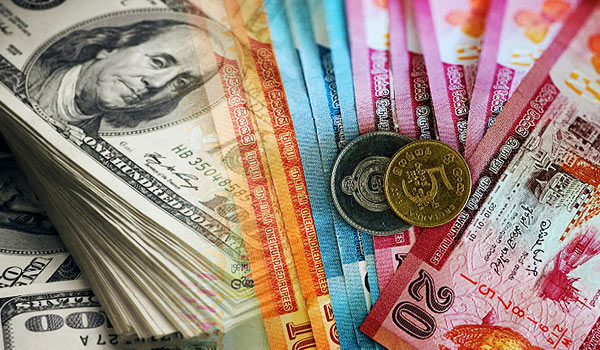
My two years of studying in Sri Lanka yielded many fond memories. The local food was delicious, and the people seemed outwardly friendly. However, scratch beneath the surface and a stark reality emerges: Sri Lankan hospitality toward Maldivians is purely financial. Maldivians do not travel to Sri Lanka to take their local jobs; we take hard currency earned in the Maldives into their economy. Whether Maldivians go there for schooling, medical treatment, or extended residence, every cent flows directly into Sri Lanka’s treasury. Sri Lankans have long viewed Maldivians as wealthy targets. Their friendliness extends only as far as our umbalhakada (Maldive fish), rihaakuru, and foreign currency—a transactional mindset tracing back to the historic trade voyages of Addu and Huvadhoo sea vessels.
Millions of dollars drained annually from the Maldivian economy
While Maldivians pump foreign currency into Sri Lanka’s economy, Sri Lankan nationals have historically come to the Maldives to work as domestic helpers, resort staff, corporate employees, auditors, and accountants. Recently, an increasing number of Sri Lankans have begun setting up illegal business operations under local Maldivian front names—mirroring patterns seen with undocumented traders from Bangladesh and India. Millions of dollars are siphoned out of the Maldivian economy each year through these businesses and employment remittances.
The hard numbers paint a revealing picture. Sudesh Mendis, former President of the Sri Lanka–Maldives Business Council, revealed in an interview with Sri Lanka’s Daily News that Sri Lankan workers in the Maldives remit approximately $129 million (nearly MVR 2 billion) to Sri Lankan economy annually—a sum he insisted should be expanded further. Mendis noted that over 21,000 Sri Lankans are currently employed in the Maldives, predominantly within our lucrative tourism sector.
In a separate Facebook post accompanied by photographs from a Business Council meeting, Mendis openly conceded that the sharp decline of Maldivians residing in Sri Lanka has dealt a severe economic blow to Colombo. He noted that prior to the 2019 Easter Sunday terrorist bombings, roughly 17,000 Maldivians lived in Sri Lanka, a figure that has now plummeted to barely 1,400. This demographic collapse represents an estimated loss of $100 million in annual revenue for Sri Lanka.
While Sri Lankan business leaders scramble to restore this "golden era" and capture millions from Maldivian pockets, Maldivians—and the Maldivian government—remain asleep at the wheel. To make matters worse, local agencies in Sri Lanka continuously extract agency fees and kickbacks on nearly all goods and shipping containers bound for the Maldives.
Sri Lanka’s short memory after Maldivian disaster relief
When Cyclone Ditwah devastated Sri Lanka with catastrophic rainfall, triggering unprecedented loss of life and massive economic ruin, the Maldivian government and its citizens rallied to provide relief that outstripped contributions relative to size from global superpowers like China and the United States. Maldivian corporations donated hundreds of thousands of dollars, national telethons raised massive funds, the government dispatched over a million cans of tuna alongside cash aid, and Maldivians living in Colombo took to the streets to assist local communities directly.
Yet, barely two months after "tiny" Maldives delivered this historic surge of aid, the Sri Lankan government wiped it from memory. Maldivians traveling to Sri Lanka for healthcare, education, or business were suddenly hit with severe visa delays and systemic racial profiling by Sri Lankan Immigration.
Personal hostility from Sri Lankan Immigration officers
Maldivians residing in Colombo report facing absurd obstacles when applying for or extending visas, with immigration staff exhibiting blatant personal hostility. Masood Imad, the Maldivian High Commissioner to Sri Lanka, confirmed to the Sri Lankan newspaper, Daily News, that Maldivian citizens were routinely made to stand in exhausting queues from 9:00 AM to 5:00 PM while immigration officials openly practiced racial favoritism. "I am truly astonished that Sri Lankan Immigration prioritizes visitors solely based on fair skin color," High Commissioner Masood was quoted as saying. This is the gratitude extended to the "small" nation that stepped up most during their hour of need.
Masood warned that persistent discrimination had shattered the long-held perception of Sri Lanka as a preferred destination for Maldivians seeking medical care and education, directly driving the collapse in the resident Maldivian population. While student visas were nominally extended from six months to one year, granting them now requires clearing a rigorous terrorism risk assessment by Sri Lanka's State Intelligence Service (SIS)—a policy implying that Maldivian Muslims are viewed through a lens of inherent suspicion.
Reciprocal visa restrictions must be enforced against Sri Lankan nationals
High Commissioner Masood warned that if Sri Lanka does not reform its treatment of Maldivian visitors, the Maldives may be forced to retaliate by tightening visa conditions for Sri Lankan expatriates entering the Maldives. Yet, Maldivians historically accept mistreatment across the region—whether at Sri Lankan immigration counters or in India, where immigration officers slam passports on counters, narrow their eyes, and glare at Maldivians like criminal suspects. Despite the humiliation, Maldivians predictably return to these countries on the next flight with a smile!
Working three months on a tourist visa: A growing loophole
Sri Lankan nationals have perfected a brazen loophole: entering the Maldives on a three-month tourist visa, working illegally for ninety days, and exiting before detection. Sri Lankan cashiers operating in major retail outlets like Shop & Save Supermarket are prime examples of this trend. While Maldivian Immigration regularly conducts enforcement raids on small local corner shops, they must show the same resolve by raiding large supermarkets in Malé to purge illegal foreign labor.
Nasheed's absurd call to dismantle border controls with Sri Lanka
While High Commissioner Masood voiced valid outrage over the mistreatment of Maldivians, former President Mohamed Nasheed interjected with a staggering proposition. Rather than defending Maldivians, Nasheed declared on "X" that all border controls between the Maldives and Sri Lanka should be completely abolished—effectively allowing Sri Lankans free entry to work and run businesses in the Maldives without work permits or visa oversight!
A complete absence of national loyalty
Nasheed argued that ending visa requirements and work permits would expand tourism, trade, and interpersonal ties. But coming shortly after his calls to hand the management of Hanimaadhoo International Airport to an Indian firm, Nasheed's proposal regarding Sri Lanka is merely a trial balloon. It is an orchestrated "warm-up" exercise designed to test public reaction before floating the eventual elimination of border controls between the Maldives and India.
Such pronouncements demonstrate a complete disregard for Maldivian national sovereignty and security. Nasheed has consistently demonstrated unyielding loyalty to Sri Lanka, India, and the United Kingdom at the expense of Maldivian interests. Whether in power or in opposition, his political trajectory—and that of his political allies like Fayyaz Ismail—consistently favors foreign entities over local stability.
Arrest of two Sri Lankans for stolen motorcycle and traffic violations
The disregard for Maldivian law among foreign nationals is reaching an alarming threshold. Despite government warnings of strict action against criminal expatriates, street crime and brazen infractions continue to escalate. Recently, Maldivian Police arrested two Sri Lankan nationals in Malé for altering the license plate of a stolen motorcycle and driving down a one-way street against traffic.
Police reported that officers on night patrol intercepted the vehicle around 02:14 AM moving illegally from Lonuziyaaraiy Magu into Rukkhenediya Hingun. Upon inspection, the 29-year-old Sri Lankan driver lacked a valid driving license. When towed and inspected further, the chassis and engine numbers failed to match the attached license plate. Cross-referencing system records confirmed the motorcycle was stolen, leading to the arrest of both Sri Lankan men. This is not an isolated traffic offense; it reflects a broader erosion of respect for Maldivian laws that threatens both economic stability and public order.
Ultimately, High Commissioner Masood Imad’s words ring true: "I am truly astonished that Sri Lankan Immigration prioritizes visitors solely based on fair skin color." This remains Sri Lanka's answer to the immense aid provided by its "small" neighbor. If Sri Lanka refuses to rectify its discriminatory visa policies, the Maldives must act decisively by enforcing strict work visa quotas, shutting down tourist visa employment loopholes, and re-establishing control over foreign businesses operating illegally in local markets. Respect is a two-way street—those who do not respect Maldivians do not deserve our leniency.