In principle, the Ras Malé land reclamation project represents a highly promising and necessary initiative with the potential to elevate the Maldives' economic and social landscape to an entirely new trajectory. It offers a permanent resolution to the severe housing crisis in the Greater Malé region while driving broader national prosperity. However, for the Maldivian public to realize the true benefits of such a massive undertaking, the government must enforce strict reforms and legal safeguards with unyielding determination.
Urging the Government Against a Rushed November 11 Signing
From a strategic and national development standpoint, Ras Malé holds undeniable transformative potential. Yet, entering into final agreements for a mega-investment of this magnitude without robust legal protections, transparent financial structures, and comprehensive, publicly disclosed environmental impact assessments presents an extreme financial and sovereign risk to the state.
As the government prepares to shoulder long-term commitments regarding land allocation and housing, rushing to execute the final contract on November 11 without full transparency for Parliament and the public is deeply ill-advised. National interest demands that the government step back, allow sufficient time for independent technical audits and financial evaluations, and ensure that citizen rights are fully safeguarded through transparent governance before any signatures are affixed.
Enlisting Top International Legal Counsel to Eliminate Loop-Holes
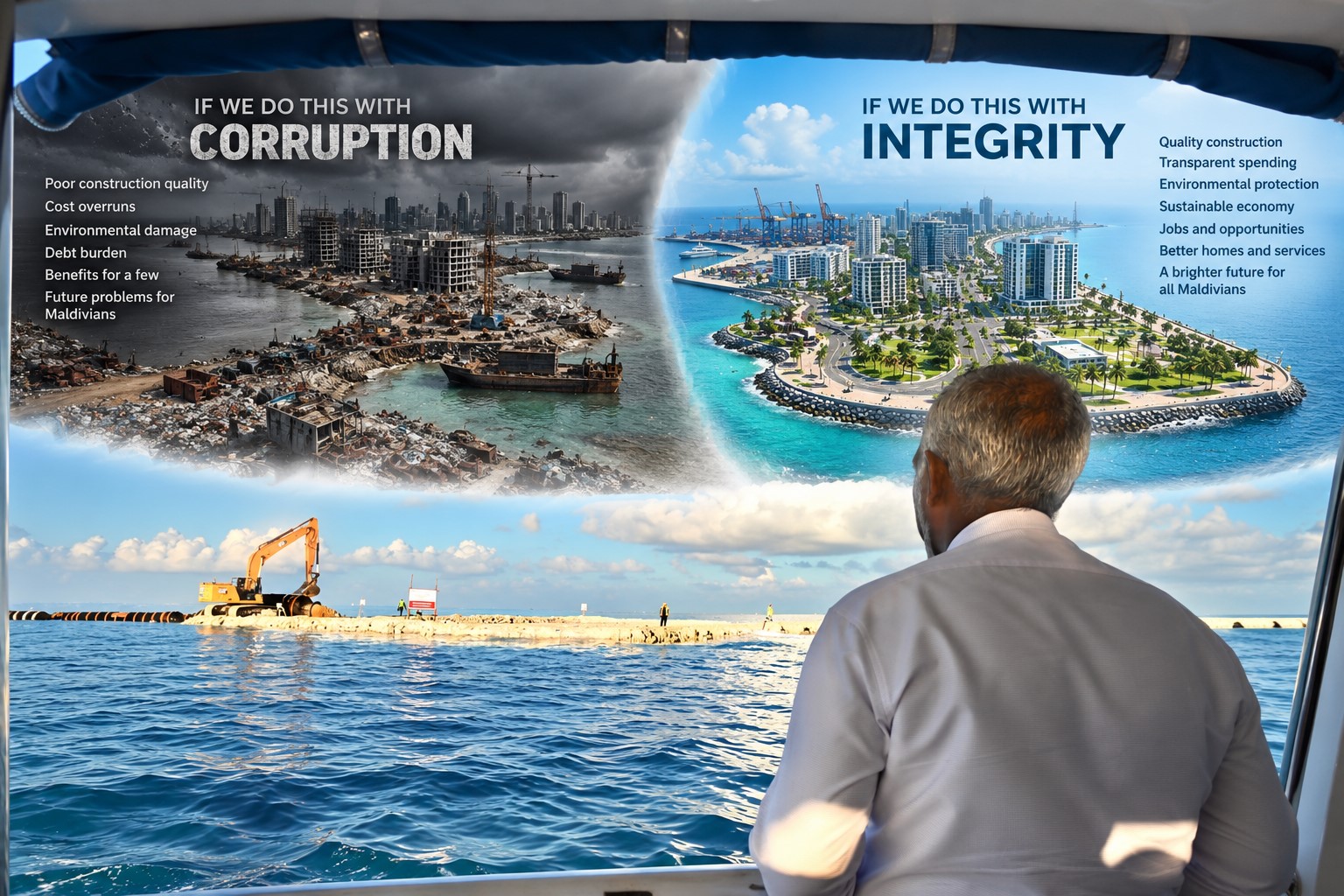
Signing a mega-contract without thorough scrutiny risks destabilizing the nation’s fiscal equilibrium, potentially plunging the Maldives into an inescapable debt abyss. Should this project be tainted by corruption or driven purely by short-term political expediency, Ras Malé will transform into a crushing financial, environmental, and national liability.
Managing investments of this scale requires complete environmental impact studies, sound debt-management frameworks, and the engagement of world-class international law firms to draft airtight contracts free of costly legal loopholes.
The Threat to National Development and Economic Sustainability
Proceeding without sound financial policies, technical research, and transparent frameworks risks driving project costs to uncontrollable levels, threatening to exhaust the state's financial reserves. Bypassing mandatory diligence subjects the economic system to unsustainable debt burdens, severely undermining the continuity of national development. Such an outcome would shake the country’s economic sovereignty, forcing future generations to bear the bitter consequences.
Protecting the Core "One-Island-One-Resort" Tourism Model
The cornerstone of Maldivian tourism—and its most acclaimed global concept—is the exclusive "One-Island-One-Resort" model. Dredging a massive lagoon like Ras Malé to concentrate large populations, industrial activities, and hotels in a single zone demands careful study of the spillover effects on the nation's premium tourism brand, alongside the immediate ecological damage to marine habitats and coral reefs.
Altering oceanic currents and destroying coral ecosystems during large-scale reclamation near the capital risks degrading the natural beauty of surrounding isolated resorts. This directly threatens the "seclusion and pristine environment" sought by high-end foreign clientele, endangering the long-term economic valuation of the resort sector.
Barring Foreign Entity Control Over National Territory
From an environmental and sovereign standpoint, one of the most alarming hazards is the opaque allocation of land and high-risk financial arrangements that could leave vast portions of Maldivian territory bound in 99-year leases to foreign interests hostile to—or aligned against—our 100% Islamic national identity and heritage.
Surrendering national land under such terms is not merely an economic loss; it poses a direct threat to the religious unity, independence, and cultural foundations of the Maldives, effectively stripping future generations of their sovereign rights.
A Promise Worth Pursuing—If Executed Correctly
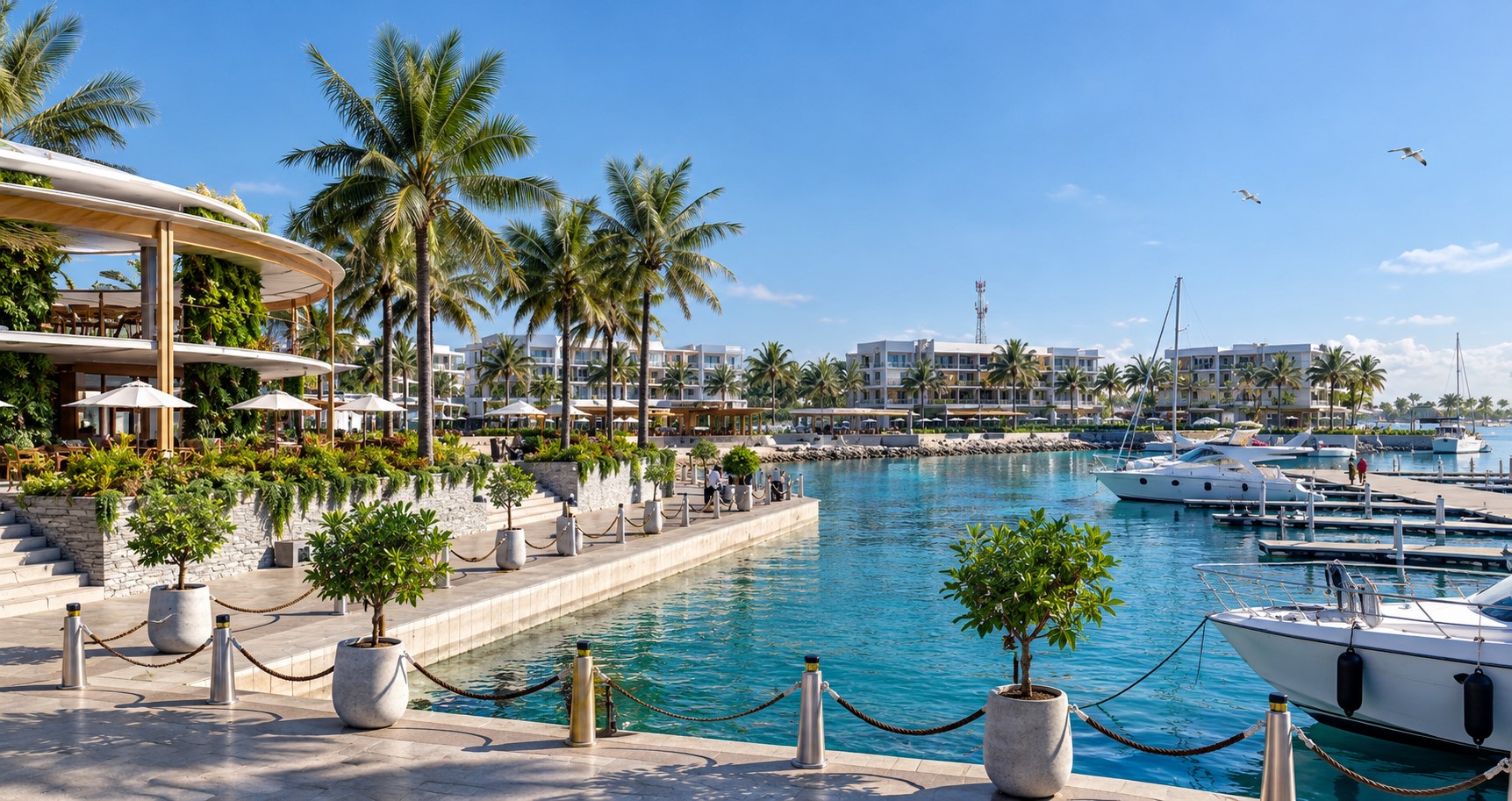
When approached with genuine integrity, sound urban planning, and transparent governance, Ras Malé retains the intrinsic capacity to revolutionize our national outlook. By expanding habitable land area, alleviating chronic housing congestion, and establishing new commercial hubs, the project can deliver a resilient, high-capacity economic future.
Lessons from History: The Halting of Dubai World’s $2 Billion Port
The political sabotage surrounding major foreign investments in the Maldives is an all-too-familiar pattern. In 2007, under President Maumoon Abdul Gayoom, Dubai World presented a $2 billion proposal to establish a world-class container transshipment port in Hulhumalé Phase II. This occurred during an era when Middle Eastern capital was actively diversifying away from Western markets post-9/11.
Had that transshipment hub materialized, the Maldives—positioned strategically along key Indian Ocean sea lanes—could have evolved into a global logistics centerpiece akin to Dubai. However, short-sighted political interference and local commercial self-interest lobbied President Maumoon into abandoning the deal, depriving the nation of a generational economic transformation.
The Cancelled $10 Billion Faafu Atoll Project
A similar failure occurred in 2017 during President Abdulla Yameen’s administration, when the Saudi royal family proposed a multi-billion-dollar luxury development in Faafu Atoll. On the eve of Saudi King Salman’s visit to formalize the initiative, opposition parties orchestrated widespread political backlash, alleging that the administration was "selling off national territory" and endangering sovereignty.
Faced with artificial unrest, Saudi Arabia redirected its capital into its Red Sea development projects. Once again, short-sighted political point-scoring cost the Maldivian economy an irreplaceable development opportunity.
Breaking the Cycle of Political Sabotage Against Mega-Projects
Today, history risks repeating itself with Ras Malé. Amid ongoing Middle Eastern instability, UAE investors sought to diversify capital into the Maldives by creating a high-density commercial and residential waterfront hub. Yet political factions are deploying familiar fear-mongering tactics to derail the initiative rather than proposing constructive legislative guardrails.
Maldivians rightfully aspire to the infrastructure standards of Singapore or Dubai. However, every time a landmark opportunity emerges, political self-interest threatens to sabotage long-term national progress. Wholesale condemnation without constructive policy engagement remains a disservice to the public.
Conclusion
Ras Malé possesses the structural fundamentals to permanently resolve the housing bottleneck of the capital region and lift the Maldivian economy to new heights. However, rushing into an opaque contract on November 11 risks depleting state reserves, damaging the resort sector, and exposing national territory to 99-year foreign leasehold risks that compromise our sovereignty and religious unity.
The responsibility resting on the government today is clear: resist a rushed signing, eliminate corrupt mechanisms, engage top international legal and financial expertise, and establish transparent frameworks that guarantee the rights of the Maldivian people and protect the sovereign interests of the state.