Earlier this year, Minister of Transport and Civil Aviation Mohamed Ameen announced that the government has initiated efforts to establish a transit hub for a major global airline at a Maldivian airport. Speaking at a press conference held at the President’s Office by the ministerial committee formed in response to Middle East tensions, the Minister highlighted that regional conflicts inflict the heaviest shocks on tourist passenger flights. He emphasized that rather than relying solely on airline hubs concentrated in a single region, establishing a secondary hub for a major foreign carrier in the Maldives is imperative to buffer the country against future economic shocks.
Discussions with Emirates to Turn Sri Lanka’s Mattala Airport into a Hub
In connection with the Minister’s remarks, a notable development occurred when Middle East airspace closures disrupted aviation traffic. During that critical window, the Sri Lankan government proposed using its Mattala Rajapaksa International Airport as a temporary transit hub for Emirates and Qatar Airways. Reports in Sri Lanka’s Daily Mirror at the time indicated that the Sri Lankan government proactively initiated talks after both airlines expressed interest in using the southern airport. However, both carriers subsequently pivoted from the idea.
Initiating Formal Talks for a Permanent Hub in the Maldives
Sri Lanka has always been an economic competitor to the Maldives. Its flag carrier, SriLankan Airlines, runs a significantly larger operation than Maldivian, the national airline of the Maldives. However, the Maldives brand holds far greater global prestige in tourism, and the nation's strategic geographic location makes it an inherently more attractive proposition for a major international airline seeking a secondary hub. While Sri Lanka’s offer was meant as a temporary fix, the Maldives must seize the opportunity to formally open negotiations for a permanent hub with aviation giants like Emirates, Qatar Airways, or Etihad Airways.
Forget Both Ends of the Gutter—Water Is Leaking from All Three Sides
Some thirty years ago, during the presidency of Maumoon Abdul Gayoom, Emirates proposed developing a similar international hub at Addu Gan Airport. At the time, however, certain political figures in Maumoon’s cabinet insisted on centralizing all economic activity within the Malé region. A senior minister of that era famously remarked, "Water doesn't pour from both ends of the gutter." Yet, in today's expanded landscape, forget both ends—water is leaking from all three sides. Today, the Maldives has no choice but to decentralize its economy and integrate the entire nation into regional development.
Developing Gan as a Gateway Linking Australia, Asia, Africa, and the Middle East
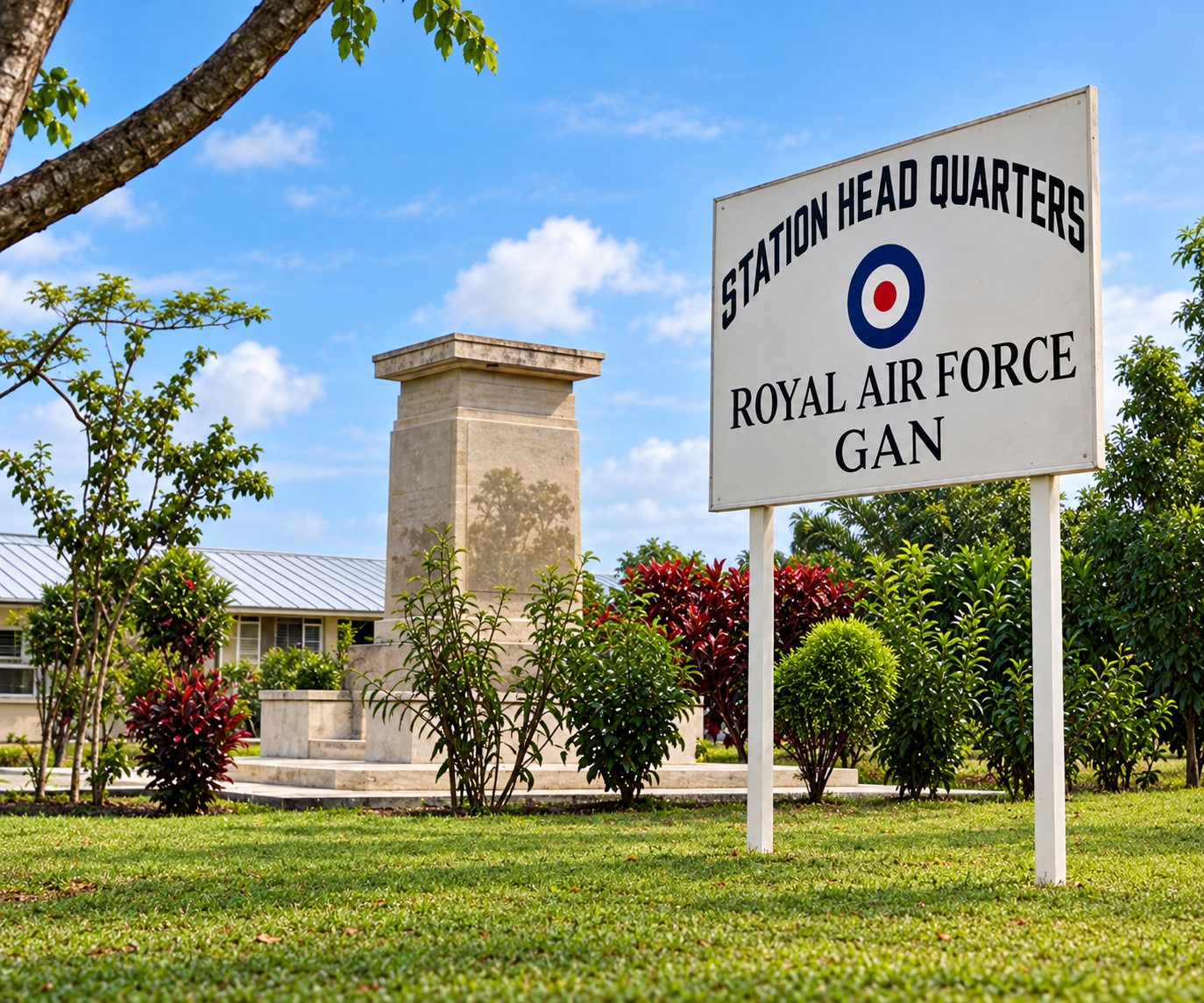
When evaluating locations for a foreign airline hub, Addu Gan International Airport emerges as the premier candidate. Gan’s 3,600-meter runway is among the longest in the Maldives. Built during World War II to accommodate heavy military aircraft of the British Royal Air Force, the runway is inherently suited for large international jets. Furthermore, as Gan is a sizable island, acquiring the additional land needed for a major aviation hub is straightforward. Gan’s strategic position enables it to serve as a pivotal flight corridor connecting Australia, Asia, Africa, and the Middle East.
Expanding the Gan Airport Project with Aerobridges and Modern Facilities
In 2023, work began on a $29 million project awarded to India’s Renatus to expand Gan Airport to serve 1.5 million passengers annually, with completion scheduled for 2027. However, designing a $29 million expansion without essential infrastructure—such as passenger aerobridges and modern X-ray security equipment—was a major oversight by the former MDP administration. If Gan is to be transformed into an international airline hub, the project scope must be expanded immediately to incorporate aerobridges and state-of-the-art aviation machinery.
Positioning Hanimaadhoo Airport as a Regional Mini-Hub for South Asia
To the north, Hanimaadhoo International Airport—developed with a 2,460-meter runway, aerobridges, and the capacity to serve 1.3 million passengers annually—is ideally positioned as a South Asian mini-hub due to its close proximity to Sri Lanka and India. However, for a major intercontinental hub connecting Australia, Asia, Africa, the Middle East, and onward to Europe, Addu Gan Airport remains the most suitable choice.
Acting Proactively Before Sri Lanka Capitalizes on the Opportunity
Lessons drawn from Middle East tensions suggest that major global carriers like Emirates will actively seek secondary regional hubs to insulate themselves against future disruptions. Although Sri Lanka sought to convert Mattala Airport—a facility featured on Forbes' list of the world's most underutilized "empty" airports—into such a hub, Sri Lanka holds distinct advantages in land area, workforce size, and labor costs. Therefore, before Sri Lanka or other regional competitors capture this market, the Maldives must move swiftly to establish a hub at an airport like Addu Gan. This is a vital national economic initiative needed to safeguard the Maldivian tourism sector from future external shocks.