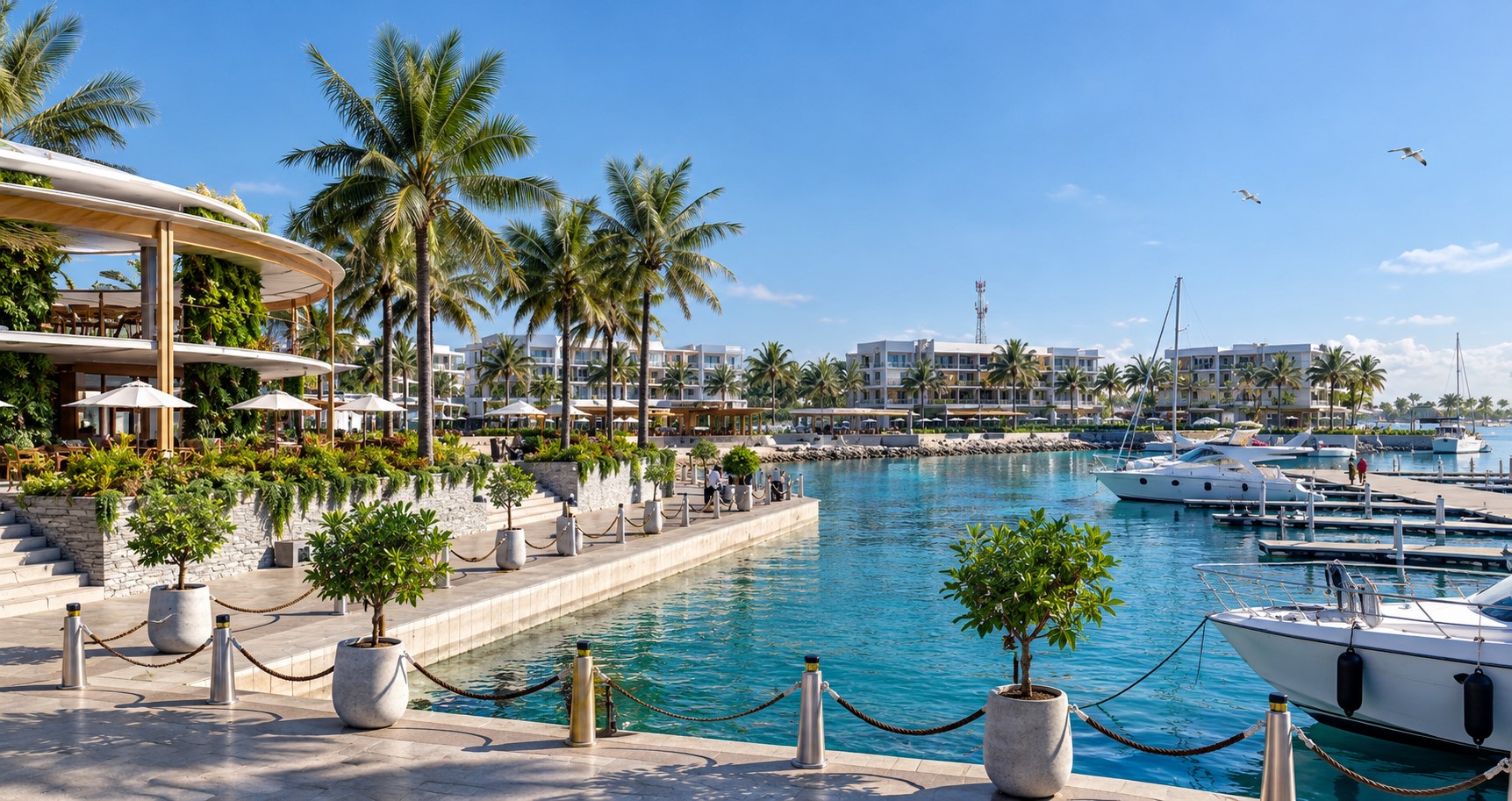
In principle, the "Ras Malé Maldives Waterfront and Marina" project possesses the potential to elevate the economic and social future of the Maldives to an entirely new trajectory. The prospect of attracting a massive foreign direct investment (FDI) between $20 billion and $30 billion—without expending a single Rufiyaa from the state budget—represents a transformative opportunity to diversify an economy over-reliant on conventional tourism, while generating substantial employment and housing. According to a statement by the Maldives Business Chamber, the project is projected to create over 54,000 new jobs and attract more than one million additional tourists annually upon completion, injecting upwards of $2 billion in annual tourism revenue into the domestic economy.
However, for the Maldivian public to realize the true benefits of such a mega-development, insulate it from political fallout, and achieve genuine operational success, the government must implement twelve essential structural reforms and transparency safeguards:
1. Reserving Core Utilities for State-Owned Enterprises
Unlike the operational model used in isolated resorts, the government must not allow a foreign developer to independently manage power, water, and sewerage infrastructure in Ras Malé. Provision of these basic services must be strictly reserved for state-owned utilities, namely STELCO and MWSC. This business model guarantees a permanent revenue stream for the state while ensuring national control over critical public utilities.
2. Retaining World-Class International Legal Counsel
Negotiating a multi-billion-dollar contract requires top-tier international legal representation. To safeguard the financial and legal interests of the Maldivian state against massive foreign investors, the state’s legal team must work alongside international law firms with proven expertise in mega-infrastructure agreements.
3. Directing Revenue to the Sovereign Development Fund
The financial terms negotiated with the developer, UAE-based Eagle Hills, must legally mandate that a fixed percentage of total revenue generated from property sales, leases, or land allocation fees be deposited directly in US Dollars into the Sovereign Development Fund (SDF) housed at the central bank. Given the fiscal reforms outlined in the 2026 budget and debt vulnerability warnings from international credit rating agencies (Fitch and Moody’s), bolstering the SDF’s dollar reserves is crucial for meeting upcoming foreign bond and sukuk obligations, strengthening national reserves, and buffering the economy against foreign exchange shortages.
4. Ring-Fencing Funding for the 5,000 Hulhumalé Housing Units
Under the proposed framework, Eagle Hills is slated to develop 5,000 social housing units in Hulhumalé at an estimated cost of $500 million (MVR 7.7 billion). This commitment must not be structured as a financial liability offset against future state revenue from Ras Malé property sales. Instead, it must be legally defined as an unrecoverable "acquisition cost" or non-refundable advance capital investment made prior to physical development. Furthermore, a binding "Project Agreement" detailing construction schedules and engineering standards must be published as an independent project to build public trust.
5. Establishing a 10-Year Master Timeline and Enforcement Penalties
Because Ras Malé is designed as a decade-long multi-phase mega-project, the master agreement must incorporate a detailed, publicly accessible "Project Master Schedule" specifying structural and financial milestones for each phase. To mitigate developer default or delay, the contract must include legally enforceable financial penalties, performance bonds, and land clawback mechanisms. Crucially, the agreement must grant the government absolute power to terminate the contract without financial liability in the event of prolonged breach or stagnation.
6. Enforcing Strict Legal Frameworks and Prohibiting Israeli Ownership
The Real Estate Bill submitted to the People's Majlis must explicitly prohibit Israeli citizens or affiliated entities from purchasing or acquiring property in Ras Malé. Given that primary commercial interest currently stems from Middle Eastern and Islamic nations, establishing clear statutory preferences for regional Islamic investment maintains cultural and geopolitical alignment.
7. Mandating 99-Year Leasehold Terminations Without Automatic Renewal
To protect national sovereignty, the agreement must explicitly dictate that upon the expiration of the 99-year leasehold period, complete ownership and control of all land and structures revert directly to the Maldivian state without financial compensation, acquisition costs, or automatic renewal clauses. Any lease extension must remain at the sole discretion of the sitting government based on national interest. Additionally, third-party sales, equity transfers, or mortgaging of leasehold rights must require explicit written state approval, ensuring ultimate jurisdiction under the Constitution of the Republic of Maldives.
8. Guaranteeing Security, Administrative Control, and Islamic Identity
Ras Malé must not become an autonomous enclave controlled by foreign developers where state jurisdiction is diluted. The agreement must mandate the permanent presence of the Maldives Police Service and the Maldives National Defence Force (MNDF) through dedicated headquarters. Furthermore, the contract must explicitly uphold the constitutional mandate that no religion other than Islam shall be practiced, strictly barring the construction of non-Islamic places of worship while incorporating state-of-the-art mosques that preserve the nation's Islamic heritage and social cohesion.
9. Ensuring Local SME Participation and Workforce Development
To retain capital within the domestic economy, the master agreement must establish competitive sub-contracting frameworks for Maldivian small-and-medium enterprises (SMEs) across construction, logistics, retail, technology, and professional services. To prepare local youth for the anticipated 54,000 jobs, the initial phase must launch mandatory vocational training and skill-building programs financed by the project.
10. Aligning Job Creation with National Demographic Planning
While the creation of 54,000 jobs is impressive on paper, the small domestic population risks creating an absolute reliance on foreign labor. To ensure these opportunities benefit Maldivians rather than disenfranchising them, the government must adopt a comprehensive national policy aiming for a population target of one million by 2050. Concurrently, technical and vocational education must be integrated into the core national curriculum to supply skilled domestic labor for the market.
11. Mandating Legislative Oversight and Independent Audits
To ensure complete accountability, the government must present the core agreement summary and financial model to the Public Accounts Committee and Economic Affairs Committee of the People's Majlis. Furthermore, independent audits by the Anti-Corruption Commission (ACC) and the Auditor General's Office must verify all financial structures, land allocation terms, and duty concessions to eliminate illicit enrichment, insulating the project from political allegations and building investor confidence.
12. Maintaining Government Accountability Over Investor Marketing
Cabinet Ministers and senior officials must act as accountable custodians of public interest rather than de facto marketing agents for foreign developers. The government must publish a single, coherent "National Policy Paper" clarifying whether Ras Malé is fundamentally a social housing initiative or a luxury international real estate hub, eliminating conflicting public messaging and maintaining a transparent, unified narrative.
Conclusion
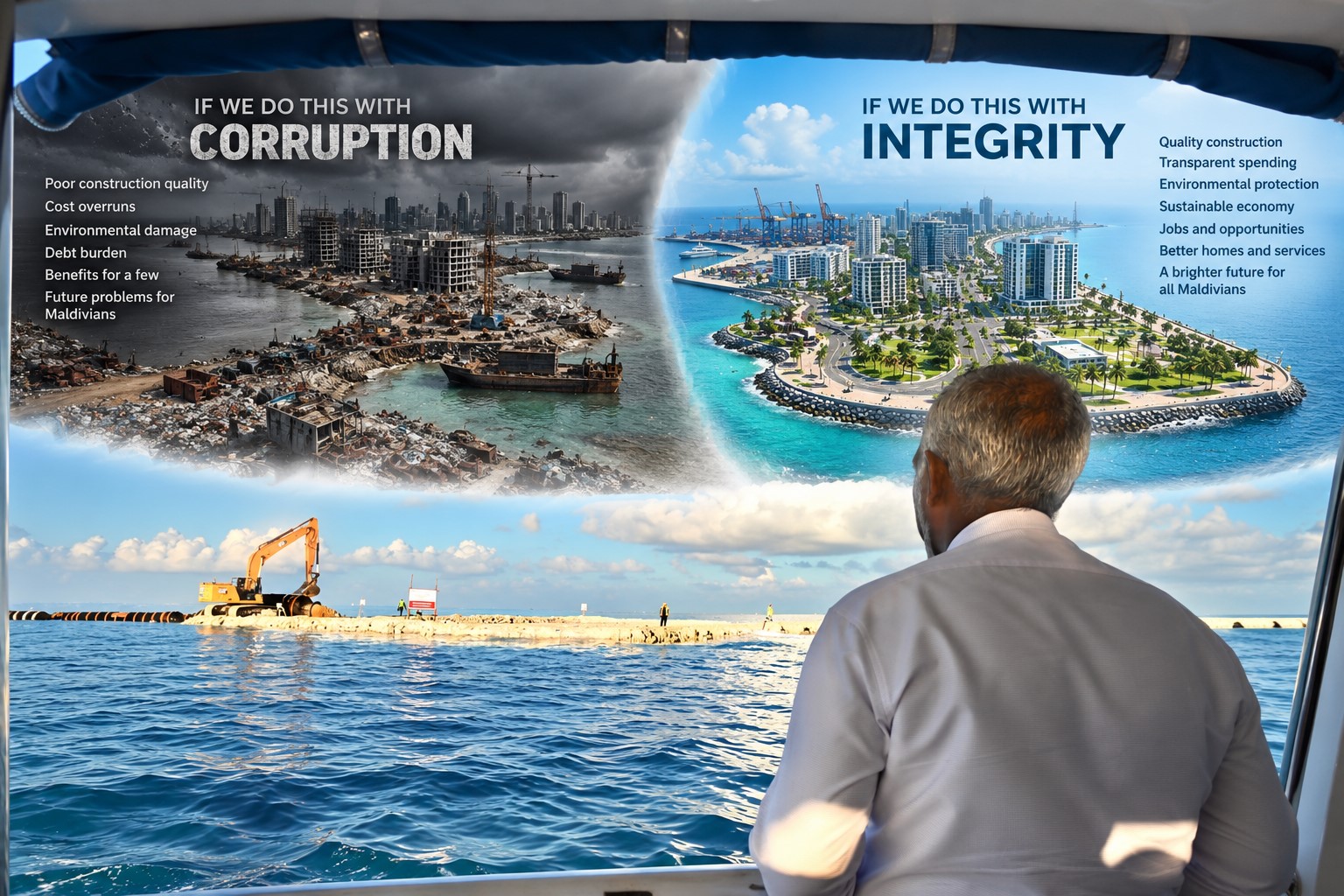
The Ras Malé project can either serve as an engine of national prosperity that elevates the Maldives on the global stage or degenerate into a catastrophic fiscal and social liability. Ignoring political fearmongering, while delivering rigorous legal, financial, and operational transparency is the only viable path forward for the administration. If the government rushes into signing an opaque agreement without these essential safeguards, it risks plunging the state and future generations into an inescapable financial and social abyss.