The tragic underwater cave incident in May 2026 at Devana Kandu in Vaavu Atoll—which took the lives of five tourists, including Professor Monica Montefalcone of the University of Genoa, her close colleagues, and an experienced instructor, as well as Staff Sergeant Mohamed Mahudhee, a capable Maldivian soldier involved in the perilous rescue operation—marks the darkest and most tragic chapter in the diving history of the Maldives. It sent a profound shockwave across the entire nation and the international diving community.
Building a Specialized Cave Diving Industry in the Maldives
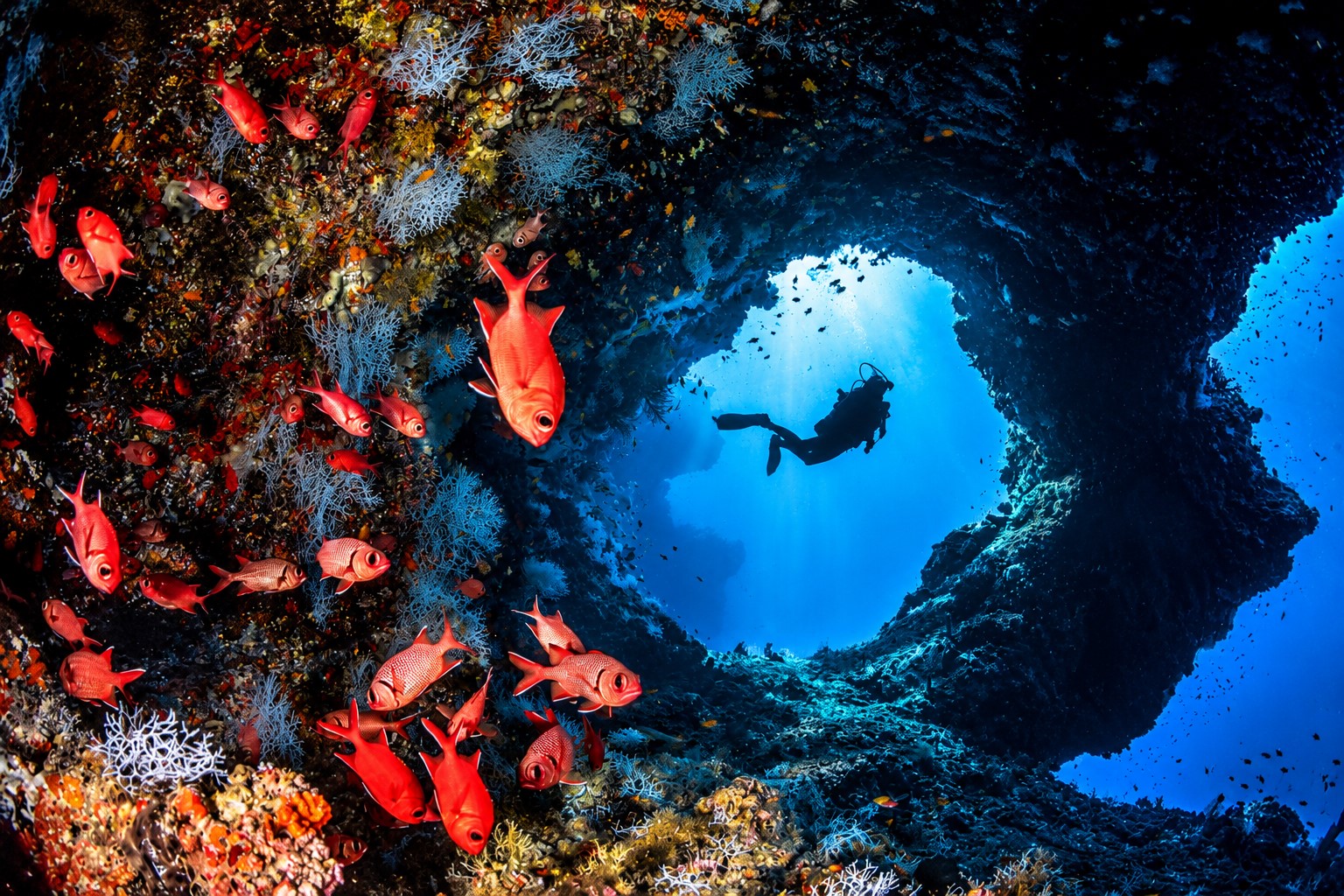
As the world continues to question how experienced divers became trapped inside this pitch-black, 260-meter-long cave divided into three chambers at a depth of 60 meters below the surface, one truth becomes abundantly clear: a vast, subterranean underwater world exists beneath our reefs that remains entirely unknown and unexplored. This tragedy is not something we should merely mourn and move past. Beyond the grief of this cave diving accident, a spark of hope must be lit. We must transform this event into an opportunity to build a specialized, safe, and internationally compliant cave diving industry in the Maldives.
International Examples of New Industries Born from Tragedy
Throughout history, major tragic accidents have repeatedly served as catalysts for elevating safety standards to new heights and birthing massive new industries across the globe. One of the most notable examples occurred in 2018, when a youth football team became trapped in Thailand's Tham Luang cave. Instead of closing off the caves out of fear, Thailand chose to develop the site under a robust regulatory framework. Today, it stands as an international hub visited by speleological researchers and cave diving tourists alike.
Looking at another instance, following the catastrophic sinking of the Titanic in 1912, new maritime safety regulations—known as SOLAS—were established, giving birth to a multi-billion-dollar industry of deep-sea exploration, specialized submersibles, and marine archaeology.
Similarly, after fatal accidents in the underwater sinkholes and cave networks of Mexico's Yucatán Peninsula in the late 20th century, strict safety standards were developed in partnership with organizations like PADI. As a result, Mexico is now the world's premier cave diving destination, generating hundreds of millions of dollars annually from cave diving tourism alone.
Key Locations for Developing Cave Diving in the Maldives
Beneath the Maldivian reefs lie massive natural cave systems carved over thousands of years. The 260-meter-long cave system in Devana Kandu, Vaavu Atoll, located at a depth of 60 meters and split into three chambers, could serve as a premier flagship hub for advanced cave divers and marine scientists. Additionally, the overhangs and caverns located between depths of 30 and 50 meters across the pinnacles (thilas) of Ari Atoll and South Malé Atoll offer ideal terrain for training tourists aspiring to cave dive before they attempt deeper systems.
Establishing Addu as an Extreme Diving Hub
Looking at the southern reefs and channels of Addu City, the sheer power of oceanic swells and currents has carved deep underwater caverns and natural cave networks—particularly around the Meedhoo and Gan channel areas. Leveraging the direct international flight routes via Gan International Airport, Addu possesses all the prerequisites to be developed into a dedicated extreme diving hub.
Capitalizing on the Deep Caves of Fuvahmulah City
Fuvahmulah City, a unique single-island atoll, features sheer reef drop-offs plunging into deep underwater cave systems and lava-tube-like geological formations. This location can be developed into an unparalleled destination where extreme cave diving can be seamlessly combined with observing pelagic marine life, such as oceanic sharks and rays.
The Maldivian Blueprint: Building a New Industry
The existing diving regulations in the Maldives are tailored strictly for recreational diving down to a standard limit of 30 meters. These rules are entirely inadequate for technical diving into dark, deep underwater cave systems.
To establish an entirely new sector within Maldivian tourism, the initial blueprint requires bringing top-tier cave instructors and safety auditors from nations with established cave diving infrastructure—such as Mexico, France, the United States, and Australia. In consultation with resort operators, specialized cave diving centers should be established across regions like Addu, Fuvahmulah, Vaavu Atoll, and Ari Atoll.
Cave Diving Must Never Be Treated as an Ordinary Excursion
In launching a cave diving industry, it is imperative that the government and marine scientists collaborate to map out the nation's underwater caves in detail, identify high-risk zones, and install clear "Danger / Do Not Enter" warning signage. Once established, diving in these systems must be strictly restricted to individuals holding recognized international high-level cave diving certifications operating under special government permits, accompanied at all times by local Maldivian cave guides who know the specific topography.
During the Devana Kandu incident, reaching the third chamber of the cave required external technical assistance. This highlights a critical prerequisite: if we are to develop this industry, providing advanced cave-rescue training to the MNDF Coast Guard and instructors at local dive centers to build in-country search and rescue capabilities is an absolute necessity.
Target Overseas Markets for Maldivian Cave Diving
The primary source market for this sector is expected to be the United States, home to the world's largest cave diving population and a deeply rooted cave diving culture in states like Florida. Other crucial markets include affluent European nations with strong technical diving demographics—such as Germany, France, the United Kingdom, and Italy—alongside Australia, and emerging high-net-worth diving segments in China and Japan.
Research shows that a technical cave diver spends between $500 and $800 per day solely on diving activities. These are high-yield tourists who pay premium rates for specialized trimix gas blends, rebreather support, and technical guide services, typically booking extended stays of three to four weeks in the Maldives.
Even if the Maldives initially attracts roughly 6,000 technical diving tourists annually, the sector could easily generate over $50 million in direct annual revenue from diving logistics, permits, accommodation, and ancillary services right at launch. Within five years, this industry holds the potential to grow into a $300 million annual revenue generator.
Cave Diving: A Sector Aligned with High-Value, Low-Impact Tourism
Cave diving represents a massive, untapped industry that aligns perfectly with the Maldives' policy of "High-Value, Low-Impact" tourism. Unlike typical leisure tourists, technical cave divers are affluent individuals willing to spend thousands of dollars on specialized gear, gas mixtures, and extensive training. This allows the national economy to derive significant financial returns from a low volume of visitors, ensuring minimal physical impact on coral reefs and fragile marine ecosystems.
Developing this industry will allow Maldivian youth to advance beyond basic dive instructing into highly certified technical and cave diving guides, enabling local professionals to participate in one of the world's highest-earning extreme sports markets. Simultaneously, establishing cave diving infrastructure will grant the MNDF Coast Guard and local divers world-class cave rescue training, equipping the nation with sovereign capabilities to respond to deep underwater emergencies.
Furthermore, because these subterranean systems are invaluable to international scientists studying geology, marine biology, and historical ocean currents, opening this sector will attract research grants and university funding to the Maldives, deepening our collective understanding of our rich underwater natural heritage.
Conclusion
The depths of Devana Kandu delivered a painful, unforgettable lesson to our nation. However, retreating in fear and turning our backs on the secrets of our natural geography would be the ultimate disservice to those who lost their lives in this tragedy. By combining robust safety standards, international expertise, and long-term governmental planning, the Ministry of Tourism and resort investors can work together to turn the underwater caves of the Maldives into a world-class hub for extreme tourism. The time has come to look beneath our coral reefs, respect the darkness, depth, and currents, and safely open a new chapter in the history of Maldivian diving.