This encounter happened five years ago, in 2021. It was time for the Maghrib prayer on a quiet evening in Addu City—the most populous city in the Maldives outside of Malé. As I entered a mosque built to accommodate 200 worshippers, I found myself in a congregation consisting of just three people, including myself. Four 25,000-BTU air conditioners hummed relentlessly 24 hours a day. Even on rainy days when the chill sent shivers through the elderly worshippers, there was no option to turn them off. The caretaker explained that the council’s strict directive was to keep the air conditioning running non-stop. Even if the congregation failed to reach four people, the AC units had to remain on full blast.
When the Maghrib prayer concluded, the three of us remained briefly to recite our supplications. But the moment the final salutations were given, the Mudhimu (Imam) said salam hastily and rushed out the door, hurrying off to his actual primary job.
Five years have passed since. The governemnt shifted mosque electricity tariffs to domestic rates, installed solar panels, repeatedly raised the salaries of imams and caretakers, and launched degree- and master's-level training programs for them. Yet, what real change has materialized? The true heart of any mosque—the rows of worshippers—remains hollow. Imams still vanish ahead of the congregation as if executing an escape drill. Imams arrive to call the adhan in a frantic rush, like a hare jolting awake only after realizing the tortoise is nearing the finish line. Positions of religious stewardship would be far better entrusted to individuals who possess genuine enthusiasm, sincerity, and deep religious awareness.
Imams Must Serve as Role Models
Mosque caretakers and imams ought to serve as pillars and role models for the community. They should be the ones who call the prayer punctually, remain behind for remembrance (dhikr), and perform the sunnah prayers. They should greet the youth who visit the mosques, offer occasional words of spiritual guidance, and extend encouragement. An imam should not be someone who walks out without acknowledging a single soul, staring blankly at the ceiling with an air of aloof authority.
That evening, after finishing my prayers, dhikr, and sunnah rak'ahs, I stepped out. Following a few errands, I stopped at a different mosque for the Isha prayer. This time, the congregation consisted of just two people. The air conditioners continued to freeze the empty hall. Immediately after the prayer, the other worshipper departed. The Imam switched off the lights and left. By the time I finished my sunnah prayers and exited, the space felt indistinguishable from an abandoned building.
This is the state of a 200-capacity mosque in the heart of a major city within a self-proclaimed 100% Islamic nation. The first row of the Isha prayer cannot even be filled. Yet, we celebrate our Islamic identity on paper. The national holiday marking the Maldives' conversion to Islam has largely devolved into a day for beach trips and leisure, with few reflecting on its spiritual significance.
Need for a Spiritual Reawakening
A few hours later, a morning experience at the Fajr prayer proved even more disquieting. The imam failed to show up to call the adhan. The only other person present was an expatriate worker from Bangladesh. As time slipped away, he called the adhan as best he could. Upon my arrival, he gestured for me to lead:
"Brother, please lead the prayer."
Though leading prayer is not a role I routinely step into, duty called, so I stood at the front and led the Fajr prayer. Once we concluded, the Bangladeshi worker departed.
I sat alone, listening to the hum of the air conditioners amidst the stillness. Outside stood dozens of homes. How many thousands of people lay wrapped in comfortable blankets in those rooms? The entire neighborhood was lost in morning sleep while the mosque stood empty. The call announcing that "prayer is better than sleep" fell on deaf ears. The imam was nowhere to be seen. After turning off the lights and leaving, a sobering thought took hold: this nation stands in dire need of a spiritual reawakening.
Political Deception vs. Religious Reality
Governments come and go, political ideologies shift, yet the political rhetoric remains remarkably consistent. Official addresses on national holidays frequently claim that the greatest threats facing the country are "extremism"!
Is that truly the primary affliction of our society? Practicing basic tenets of the faith—attending the five daily prayers in congregation, wearing the hijab, observing voluntary fasts, rejecting usury, lowering one's gaze, and avoiding illicit entertainment—is sometimes painted through political lenses as "extremism."
Conversely, celebrating Western holidays, partying at resorts, engaging in nightclub culture, and avoiding mosques entirely are widely presented to the youth as hallmarks of "modernity and progress." The concept that Islam is a religion of ease has been twisted; indulgence and permissiveness are rebranded as ease, while adhering to faith boundaries is labeled as fundamentalism. Society finds itself trapped in this deep contradiction, making the empty prayer rows less of a surprise and more of a predictable outcome.
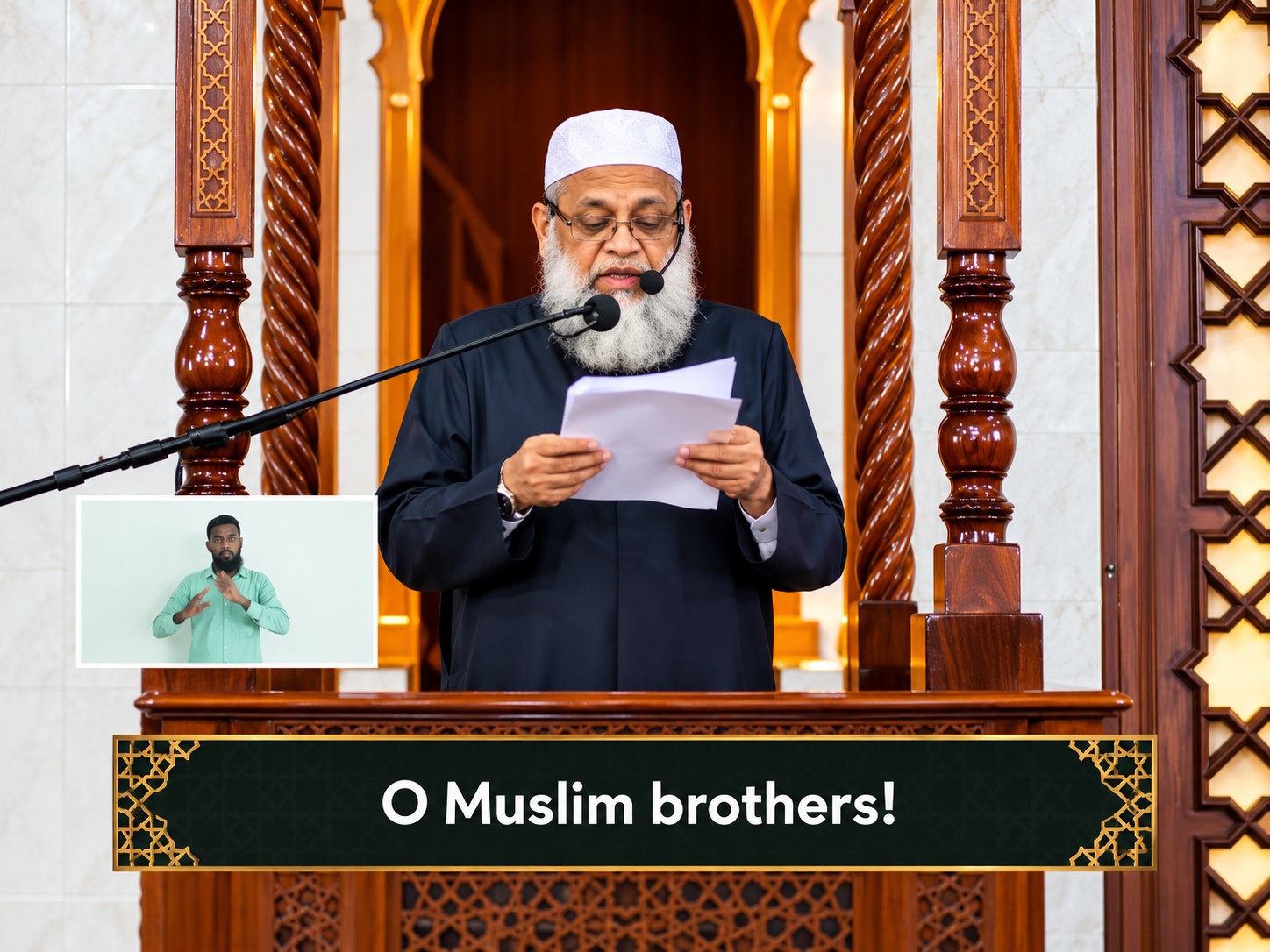
The same disconnect applies to Friday sermons. While the themes are often well-chosen—focusing on moral conduct and upbringing—the message is drowned out by the pervasive noise of social media and online vulgarity. The spirit of Islamic jurisprudence remains largely confined to textbook pages. Sermons delivered from the pulpit often sound robotic and formulaic, failing to touch hearts or spark genuine spiritual revival.
If we are not careful, we risk reaching a point where we no longer celebrate the day the Maldives embraced Islam, but mourn the day it lost its Islam. Sitting in contemplation as the sun rose, I performed the two rak'ahs of the Ishraq prayer and stepped out into the morning air. In the surrounding houses, the community remained fast asleep. This is not merely physical rest—it is a deep spiritual slumber, a state of profound apathy. The question remains: when will the Maldivian nation finally wake up?