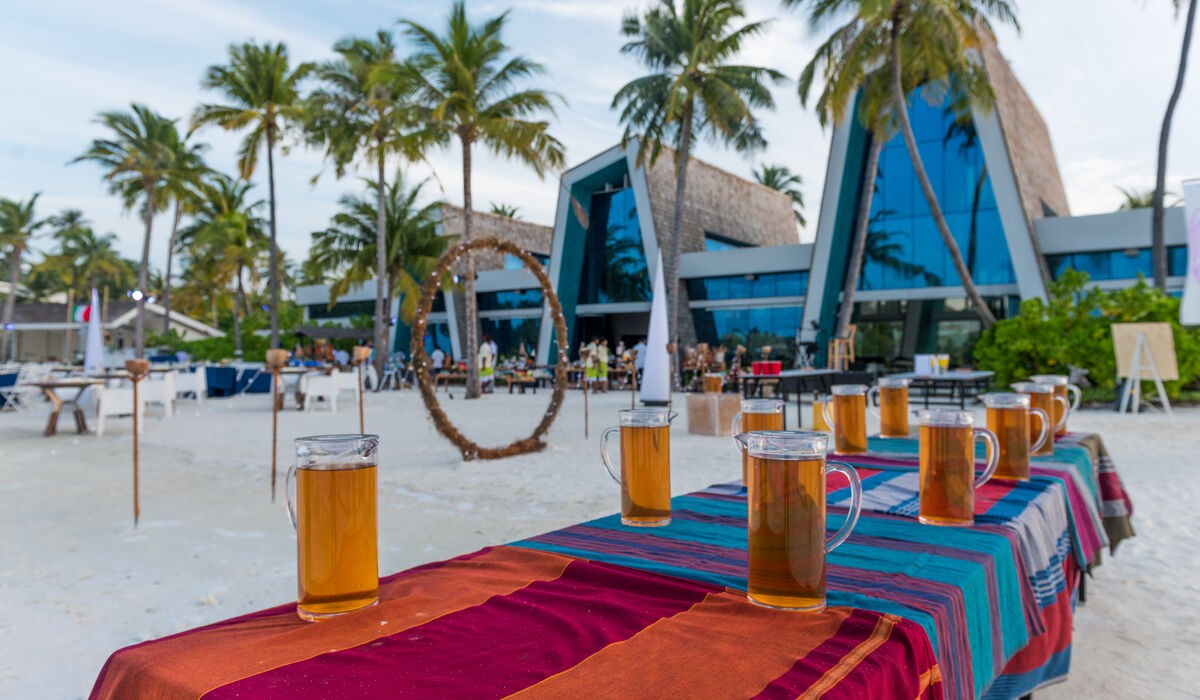
Imagine if the government permitted the sale of alcohol in inhabited islands across the Maldives. The public outcry would be immediate and massive. "Political leaders" and "religious scholars" would crawl out of hiding to issue fatwas left and right, arguing that no law conflicting with Islamic Shariah or Islamic principles can ever be allowed in the Maldives. A few years ago, when an underwater museum featuring statues was created at a resort called Coralarium (Secret Water Island), several religious scholars voiced fierce outrage because statues are forbidden in Islam. And rightfully so. But if alcohol and statues are prohibited, isn't taking or paying interest (riba) equally forbidden?
My question is simple: Did Allah forbid alcohol alone? Is bank interest (riba) somehow permissible? In Surah Al-Baqarah, Allah clearly declares war from Him and His Messenger against those who engage in and profit from riba.
Even though riba has become widespread globally and within the Maldives, there is no valid excuse or justification to legalize what Allah has made impermissible. Those disconnected from religious principles might treat these arguments as a joke, claiming that a modern society cannot progress without selling alcohol to tourists or using interest-based banking. However, a Muslim's core belief must be that there is no blessing (barakah) in what Allah has forbidden, and that turning away from unlawful transactions opens new, unexpected doors of sustenance.
Islamic Shariah seems to be applied selectively in the Maldives—if a forbidden act is convenient, it is tolerated. Very few politicians dare to speak out against riba. Leaders across various political parties—whether from the Adhaalath Party, the Maumoon Reform Movement (MRM), or the ruling PNC—remain silent on this issue out of fear of losing public support or votes. They do not seem to fear the consequences of legalizing what Allah has forbidden, yet they dread speaking the truth if it threatens their popularity. What greater hypocrisy could there be?
Has Allah declared war against sinners who commit other prohibited acts, such as consuming alcohol or committing adultery (zina)? No—this declaration of war is unique to riba. It applies to the one who pays interest, the one who receives it, and those who facilitate it. So, if politicians and religious scholars treat riba as a trivial matter while magnifying seemingly lesser issues, what are they if not hypocrites?
A similar hypocrisy surrounds the obligation of modest dress (awrah) for women. Some politicians frame modesty as a matter of personal choice. During President Maumoon's administration, when asked in a magazine interview why his wife, Madam Nasreena, did not wear a headscarf, he responded that wearing one was "Nasreena's personal choice."
SubhanAllah!
Except for the face and hands, covering the rest of the body is a clear obligation agreed upon by all Islamic scholars, with no scholarly disagreement. The only debate lies in whether covering the face (niqab) is mandatory or recommended. Therefore, covering one's modesty is not a "personal choice" for a Muslim woman. Denying this command of Allah means arguing against Allah's decree. By that logic, shouldn't drinking alcohol or committing adultery also be left to personal choice? Permitting Muslim women to walk around without covering their awrah in the Maldives is nothing short of normalizing the forbidden. No politician, even those in the current PNC-led government, has the courage to address this, exposing their hypocrisy and self-interest.
When Islam was first revealed, certain prohibitions, like that of alcohol, were introduced gradually. Some argue that a similar, gradual approach should be applied in modern times. However, no one has the authority to legalize what Allah has made forbidden under the guise of "gradual implementation." Just as alcohol is forbidden, riba and failing to cover one's modesty are equally forbidden. The only difference is that those who speak against alcohol lack the courage to speak against interest and immodesty.
Just like riba and modest dress, another topic politicians and political scholars avoid is zakat. Paying 2.5% (one-fortieth) of one's accumulated wealth annually once it reaches the threshold (nisab) is a major obligation ordained by Allah. Just as individuals are obligated to pay it, the state is obligated to collect and distribute it to its rightful poor recipients. Instead, governments enforce human-made taxes—such as corporate profit taxes and GST—imposing harsh penalties and imprisonment for non-compliance of those taxes, while ignoring the implementation of the divine obligation of zakat. Failing to pay zakat is treated as an acceptable "personal choice." Not a single political leader or political scholar dares to challenge this.
Only very few politicians and few sheikhs have the courage to demand an end to unrestricted access to explicit adult websites in the Maldives, or to call for internet censorship against content that violates Islamic values. Any politician proposing internet filtering risks ruining their political career, while the nation’s two main internet providers, Dhiragu and Ooredoo continue to benefit financially from the lewdness of those Maldivians and expatriates who watch filth on the internet. This is the reality in a 100% Muslim nation: political leaders are too afraid to speak out because doing so makes them unpopular.
The National Fatwa Council of Maldives also turns a blind eye to reviewing cable TV policies and regulating internet/online content to safeguard public morality.
While riba, immodesty, the neglect of zakat, and access to explicit content have become normalized, where are the political leaders? Where are the political scholars? Where is the National Fatwa Council?
Eradicating riba may be difficult, but it remains an essential conversation that political figures refuse to address. Likewise, we must courageously state that immodesty is forbidden and that state collection of zakat is mandatory. Cable channels that broadcast content opposing Islamic morality—such as Fashion TV—should be restricted. During Ramadan, media broadcasts should prioritize religious programming, especially after midnight on TV and radio. Furthermore, the habit of tuning into Indian TV channels that showcase Hindhu worship needs to end. These are crucial topics that politicians and political scholars refuse to raise.
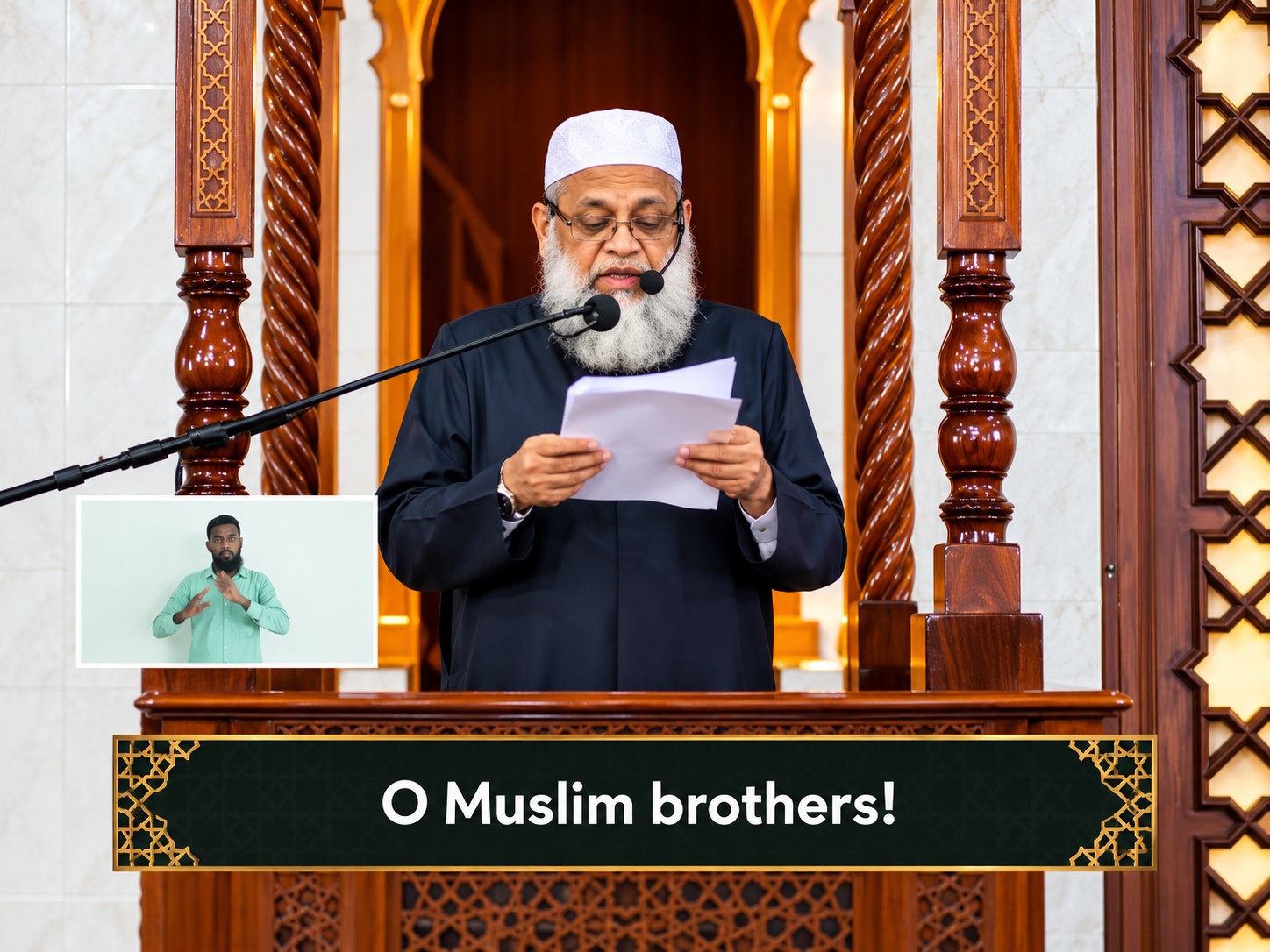
These discussions should not be confined to Friday sermons. They belong in the People's Majlis, on political podiums, in community gathering spots (holhuashi), and across media platforms. This society must wake up from its slumber and foster a truly Islamic environment in the Maldives. Who are we afraid of? Is it cowardice or hypocrisy that stops us from speaking the truth? Which political leaders or religious scholars will step up and take responsibility?