An objective assessment of the social and educational landscape in the Maldives reveals an undeniable reality: our education system and the digital environment in which young people grow up have cultivated a generation—particularly Gen Z and younger children—far more proficient in English than in Dhivehi when it comes to comprehending complex concepts. While most Maldivian youth speak conversational Dhivehi in daily life, they grasp deep religious principles, nuanced ethical framework, and intellectual arguments far more clearly in English.
Fulfilling the True Purpose of Religious Guidance and Islamic Studies
This linguistic shift presents a critical challenge: Islamic Khutbah and the Islamic Studies in schools being in Dhivehi language are failing to reach the younger generation. By stubbornly using Dhivehi as a medium to give religious sermons (Khutbah), and in teaching Islam as a subject in schools, we are failing to achieve our primary objective of teaching Islamic values to our youth and the citizens in general.
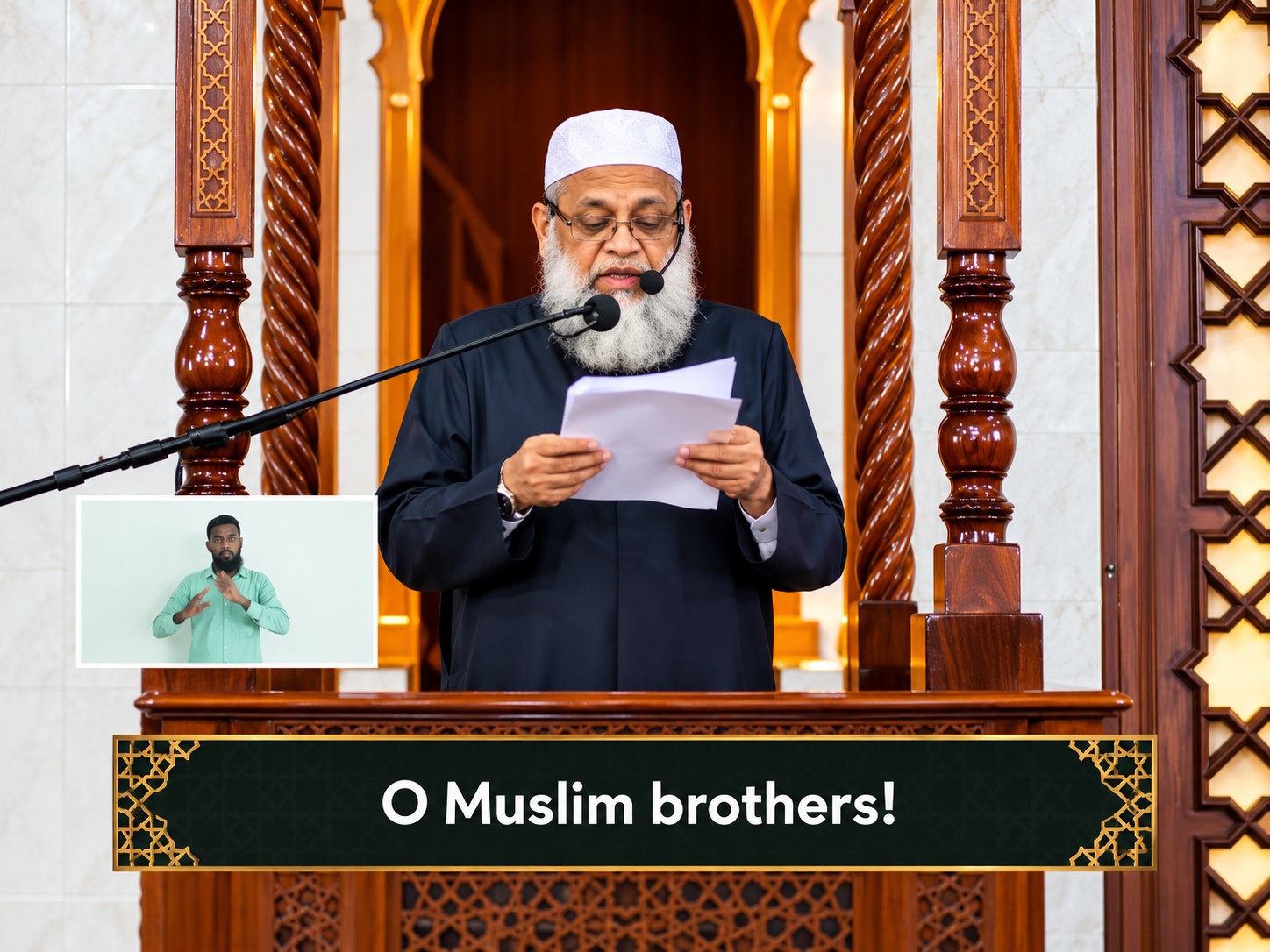
When the Friday Khutbah (sermon) is delivered in traditional Dhivehi, its sophisticated historical, literary, and jurisprudential vocabulary often goes over the heads of young congregants. As a result, the spiritual and moral guidance intended for them is lost. Furthermore, insisting on teaching Islamic Studies exclusively in Dhivehi under the guise of promoting the national language produces a counterproductive outcome: students end up mastering neither the Dhivehi language nor the fundamental tenets of Islamic creed (Aqeedah) and jurisprudence (Fiqh).
Minister Shaheem’s Pragmatic Vision
As debate over this issue intensified across social and educational circles earlier this year, Islamic Affairs Minister Dr. Mohamed Shaheem Ali Saeed offered a pragmatic, modern perspective. Reacting to media commentary discussing how youth struggle with Dhivehi in religious contexts, Dr. Shaheem noted on social media that if students understand Islamic Studies better when taught in English, offering the subject in English poses no inherent issue.
Dr. Shaheem emphasized that the Islamic curriculum must be modernized and rewritten in accessible language tailored to current generations. He also highlighted the need to overhaul textbook layouts and structural design.
"I believe the essential components of the Islamic curriculum should be redeveloped in an age-appropriate manner. Rather than cramming multiple branches of Islamic knowledge into a single textbook, it would be far better to divide them into distinct subjects across different key stages. If students comprehend Islamic Studies better in English, I see no problem whatsoever with teaching the subject in English," said Dr. Mohamed Shaheem Ali Saeed, Minister of Islamic Affairs.
Splitting Islamic subject into distinct modules—such as Hadith, Quran, Fiqh, and Islamic History
Dr. Shaheem’s proposal to decouple subject matter is particularly spot on. Combining Islamic history, Quranic exegesis, Hadith studies, jurisprudence (Fiqh), and theology (Aqeedah) into a single monolithic subject called "Islam" creates confusion, leaving students with a superficial understanding of each area. Splitting these into distinct modules—such as Hadith, Quran, Fiqh, and Islamic History—would significantly improve educational outcomes.
Furthermore, Minister Shaheem pointed out that the Dhivehi language should be strengthened through its own dedicated curriculum rather than relying on religious subjects to bear the burden of language preservation. Attempting to convert the entire education system back into Dhivehi to save the language would be impractical and counterproductive for the country. While the Minister framed these remarks as personal insights, they resonate deeply with many practicing educators who face these classroom realities every day.
Classroom Realities: The Educator’s Dilemma
Islamic Studies teachers frequently report that when complex theological and legal concepts are presented in Dhivehi, students respond with blank stares. Unfamiliarity with archaically structured sentences and specialized religious terminology leads to disengagement, undermining the core purpose of the lesson.
Conversely, when teachers explain these concepts using English terminology and accessible phrasing, student engagement soars. Learners ask probing questions and gain a genuine, functional understanding of Islamic principles. Adapting the medium of instruction is not a sign of disrespect toward Dhivehi; rather, it prioritizes substance over medium. Language is a vehicle for transmitting truth, and wisdom dictates that the message must take precedence over the vehicle.
Global Precedents in the Islamic World
The challenge of engaging an English-proficient youth demographic is not unique to the Maldives. Muslim communities and nation-states worldwide have adopted practical strategies to bridge language barriers without compromising religious integrity.
Singapore: Although Muslims form a minority, the Islamic Religious Council of Singapore (MUIS) serves as a benchmark for contemporary religious administration. MUIS provides Friday Khutbahs in English across numerous mosques, offers real-time digital translation, and structures its Islamic education modules (such as the aLIM Programme) in English to ensure complete comprehension among youth.
Malaysia: Despite Malay being the official national language, major mosques in urban hubs like Kuala Lumpur regularly deliver Friday sermons in English. This caters not only to the international community but also to local youth educated in English-medium institutions.
United Arab Emirates: As an Arab nation whose native tongue is the language of the Quran, the UAE has nevertheless embraced modern solutions. The General Authority of Islamic Affairs and Endowments provides live English translation of Friday sermons via dedicated mobile applications, while selecting key city mosques to deliver full sermons directly in English.
Actionable Policy Recommendations for the Maldives
To revitalize Islamic understanding in the Maldives, policy decisions must align with current realities through two concrete steps:
Designate Specific Mosques for English Khutbahs in Malé:
As an initial step, delivering Friday sermons in English at minimum one designated mosque in the Greater Malé area—such as King Salman Mosque or a prominent mosque in Hulhumalé—would meaningfully re-engage local youth as well as foreign residents.
Offer English-Medium Islamic Studies Options in Schools:
Allowing schools to offer Islamic Studies in English would deepen students' comprehension and cultivate a firmer, more meaningful personal faith. If the goal is to promote Dhivehi, that objective should be pursued by modernizing the Dhivehi Language and Literature curriculum itself, rather than using religious instruction as a tool for linguistic preservation at the expense of faith comprehension.
Conclusion
The Dhivehi language remains our proud national heritage, rich in cultural identity and deserving of preservation. However, weaponizing language preservation at the cost of religious comprehension risks alienating an entire generation from the core wisdom, theology, and ethical values of Islam. Embracing pragmatic, multilingual approaches to religious instruction is not an erosion of identity—it is an essential step to safeguard Islamic guidance for generations to come.