The Government’s Proposal and Its Underlying Political Agenda
The bill submitted to Parliament by Maafannu South MP Abdulla Rifau (Boche) on behalf of the ruling PNC government—which amends the Penal Code to criminalize acts targeted against specific religious groups—is officially framed as a step toward honoring international conventions and safeguarding national economic security. However, behind these administrative justifications lies a calculated political and geopolitical maneuver.
The Rasmale’ Project and the Threat of Zionist Capital
Crucially, the decision to classify actions that incite hatred against specific nations or religions, as well as actions aimed at disrupting core economic sectors, as major criminal offenses appears designed to stifle the growing public discourse surrounding the controversial $20 billion "Rasmale’" mega-project.
Following the signing of the commercial agreement between the Maldivian government and UAE-based developer Eagle Hills to develop 500 hectares of land in Fushidhiggaru Falhu for lease period of almost one century, public anxiety among Maldivians has escalated dramatically. The United Arab Emirates has normalized political and economic ties with Israel under the Abraham Accords, creating an environment fully accessible to Zionist capital. As 8,800 real estate properties on 500 hectares of reclaimed land are slated for 99-year leases in Rasmale, significant concerns have emerged that Israeli firms and Zionist investors could acquire assets or establish a foothold on Maldivian soil using foreign passports. The depth of public outrage was underscored when Housing Minister Dr. Abdulla Muththalib felt compelled to publicly assure citizens that measures would be taken to block Israeli nationals and affiliated companies from purchasing properties in Rasmale’. But most people do not believe what the government is saying.
External Pressure and the Strategy to Silence Protests
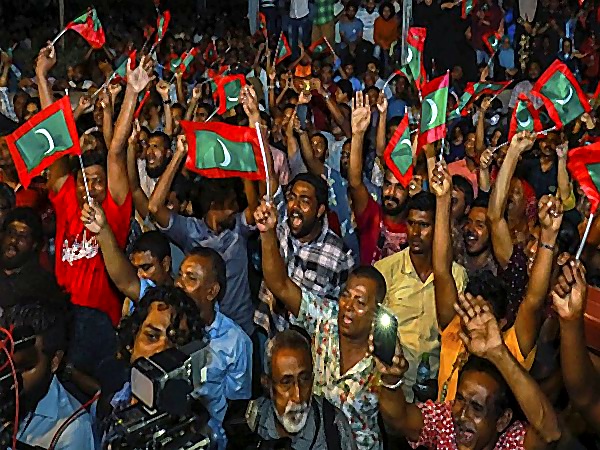
Allegations are mounting that foreign interests are exerting pressure through the UAE to ensure that Maldivian public protests do not jeopardize the financial stakes bound to this mega-development. By introducing provisions into the Penal Code that criminalize hate speech against specific national or religious groups, alongside broad prohibitions against causing harm to state economic security, the government is building a legal infrastructure capable of suppressing civic resistance.
Silencing Dissent Behind a Legal Curtain
While presented externally as a measure to strengthen national security, this legislative shift functions in practice as a legal barrier to silence citizens opposing the Rasmale’ project, Eagle Hills, and the underlying financial networks tied to Zionist capital.
Criminal Prosecution and Political Intimidation
Under these amendments, public activism directed against Zionist investments or Israeli commercial interests could easily be interpreted by authorities as inciting hatred against a specific religion or nationality, exposing critics to severe criminal prosecution. Furthermore, because the government projects Rasmale’ to be a multi-billion-dollar driver of state revenue, public calls to boycott the project or organize demonstrations against it could be classified as acts harmful to national economic security. The bill also stipulates that any individual convicted under these provisions will be permanently barred from holding public office or civil service employment, serving as a direct warning to opposition politicians, activists, and everyday citizens.
Conclusion: A Direct Threat to Democracy and Sovereignty
This legislative initiative is far more than a routine alignment with international genocide treaties. It represents a legal shield designed to eliminate domestic hurdles facing foreign financial interests operating through the UAE, while effectively outlawing critical commentary on government economic policy. As Maldivian land and sovereignty are opened to foreign capital, attempting to mute the voices of the citizenry through legal coercion poses a grave threat to the nation's democratic future.