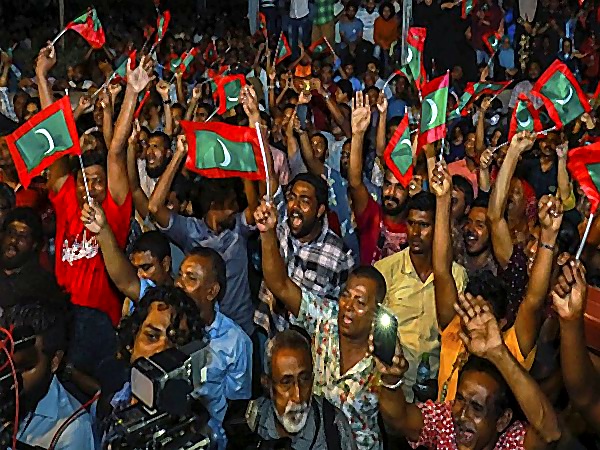
As street chaos subsides and public trust in the Maldivian Democratic Party (MDP) continues to erode, the opposition has once again retreated behind the familiar shields of religious alarmism and nationalistic rhetoric. Led by the Maldivian Democratic Party (MDP), and former President Abdulla Yameen’s People’s National Front (PNF), the opposition has deployed former Home Minister Imran Abdulla—acting essentially as a hired political mercenary—to spearhead an anti-Ras Malé movement. In the landscape of Maldivian politics, this sudden theatre of outrage is hardly surprising. What we are witnessing today is a cynical political spectacle designed to deceive the public.
A Mercenary’s Return from Bangkok
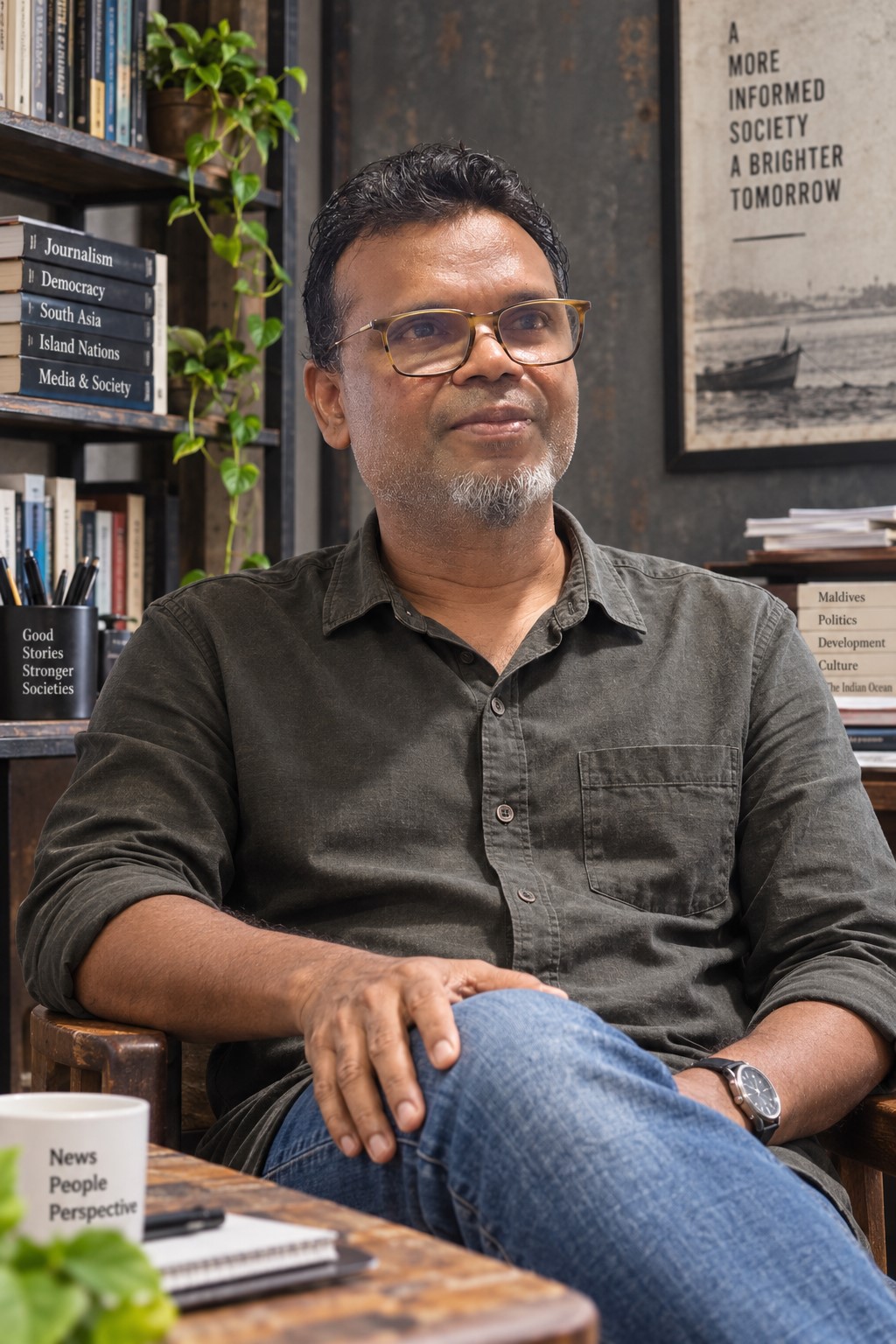
Having spent months enjoying a comfortable lifestyle in Bangkok after his party lost the 2023 election, Sheikh Imran Abdulla suddenly mounted political podiums in Malé, launching a movement dubbed "Maldivian Land for Maldivians" against the Ras-Malé development. His sudden reappearance does not reflect genuine national concern; rather, it bears all the hallmarks of a political mercenary for hire.
Sheikh Imran is a figure whose political and moral credibility before the Maldivian public was thoroughly shattered during his tenure as Home Minister in the Ibrahim Mohamed Solih administration. When the Solih government surrendered a vast swath of the Maldives' southern maritime territory to Mauritius in the Chagos dispute—abandoning the nation's sovereign rights without even a whimper of protest—where was Imran’s burning patriotism? A minister who sat in comfortable silence as the nation's seas were relinquished has zero moral authority today to drape himself in religious and nationalist flags to block a transformative $20 billion foreign investment.
The $20 Billion Ras Malé Project: An Economic Paradigm Shift
The $20 billion Maldives Waterfront and Marina project at Ras Malé, signed with the United Arab Emirates’ renowned Eagle Hills, represents the largest and most ambitious economic undertaking in Maldivian history. Spearheaded by Mohamed Alabbar—the globally respected investor behind Dubai’s iconic Burj Khalifa and Emaar projects—this investment extends far beyond addressing Malé’s chronic housing shortages.
A sober look at the economic realities reveals that Ras Malé will establish a crucial new pillar for a Maldivian economy currently over-reliant on conventional tourism. Government estimates project that upon completion, the development will generate over $2 billion in additional annual tourism revenue alone. Furthermore, the project is expected to create over 54,000 jobs while securing the construction of 5,000 housing units in Hulhumalé as part of the broader development package.
Securing a mega-investment of this magnitude as direct foreign investment (FDI)—without spending a single laari from the state budget—is undeniable proof of President Dr. Mohamed Muizzu’s strategic diplomatic and economic foresight.
Debunking the Opposition's "Zionist" and Religious Fearmongering
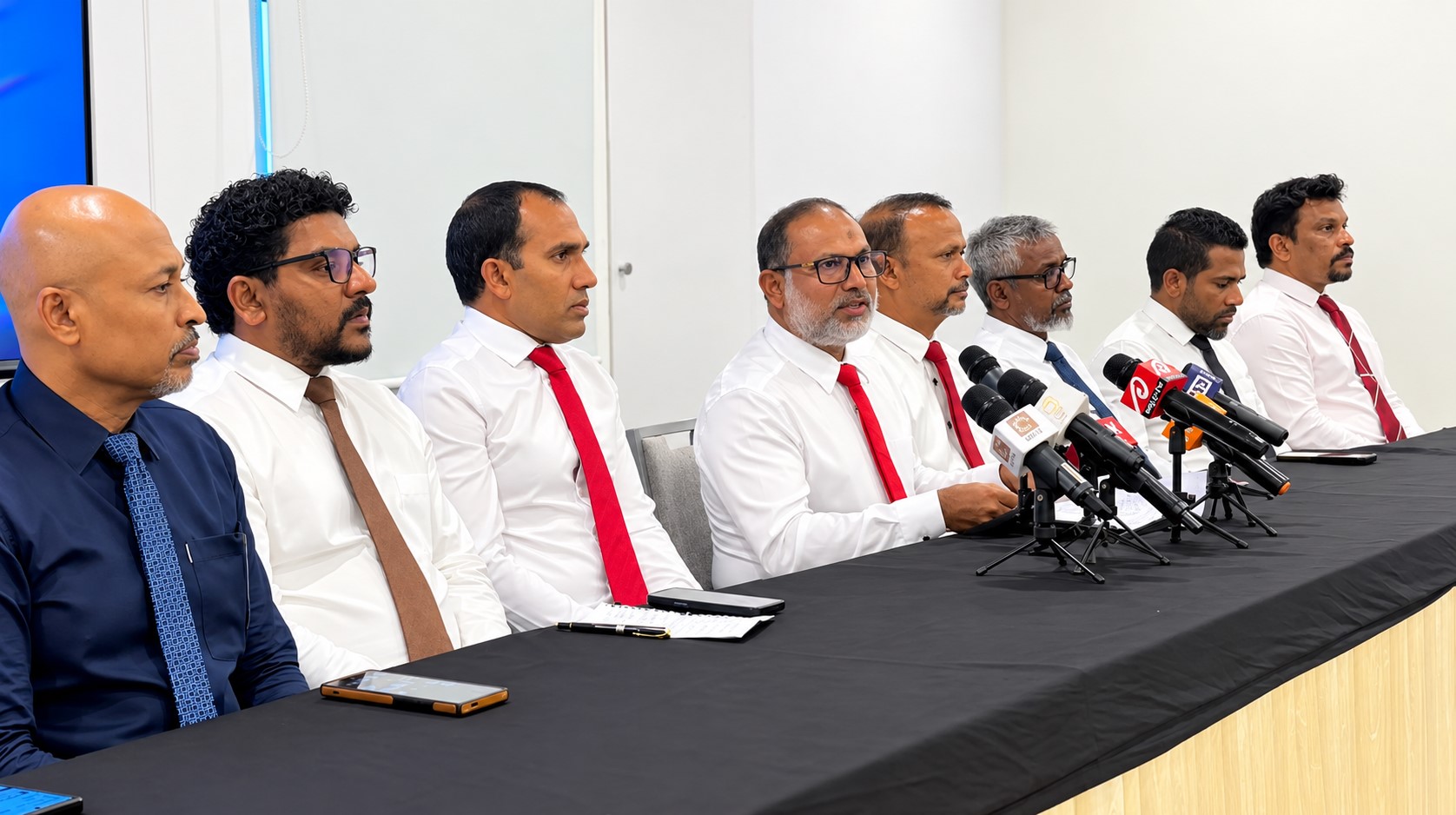
In press conferences orchestrated under Imran's banner, opposition figures have claimed that Ras Malé amounts to "selling land to Zionists" and predicted that "30,000 non-Muslims will settle in Malé and conduct un-Islamic festivals." These sensationalist claims are empty fabrications engineered solely to exploit public sentiment.
Both the Maldivian government and Eagle Hills have swiftly dismantled these falsehoods:
Legal Ban on Israeli investment: Minister of Housing Dr. Abdulla Muththalib publicly declared that strict legal safeguards are being instituted to ensure that Israeli citizens and Israeli-linked corporate entities are explicitly barred from buying property or investing in the project.
Respect for National Laws: Mohamed Alabbar, Chairman of Eagle Hills, reaffirmed that the company operates with complete respect for local laws—including the Israeli passport ban—and Islamic principles, emphasizing that the primary beneficiaries of this landmark development will be the Maldivian people.
For an opposition coalition to stand before the public and accuse a premier UAE enterprise—a firm originating from a leading Islamic nation with a stellar global track record—of handing land to "Zionists" is an unprincipled misuse of religion for partisan gain.
The 99-Year Lease and the Misleading "Khaibar" Parallels
Opposition figures have cited a paper by a local religious group to argue that a 99-year lease violates Islamic Sharia, attempting to draw parallels with the historic Treaty of Khaibar. This argument is legally and academically baseless.
Under the Ras Malé agreement, the land remains under the absolute sovereign jurisdiction of the Republic of Maldives. A 99-year lease structure is standard international practice for major economic developments, mirror-imaging the long-term lease models long utilized in the Maldivian resort sector. Furthermore, the Treaty of Khaibar was a 7th-century military and administrative arrangement made with a hostile force following conflict. Comparing a historical wartime pact to a modern, commercial investment contract with a company from an Islamic nation is a gross distortion of religious texts for political ends.
Imran’s Lack of Credibility and Government Resolve
As the government spokesperson noted, Sheikh Imran Abdulla holds no official state office or recognized leadership position within a registered political party. His public credibility was irrevocably damaged years ago when he brandished papers at political rallies claiming to possess definitive documentary evidence regarding the murder of Dr. Afrasheem Ali, only to level baseless accusations against political rivals. Between those unfulfilled claims and his complicity in the Chagos maritime concession, neither the government nor the public retains any faith in his rhetoric.
The opposition’s goal is not to seek clarity, but to take to political podiums to stoke fear and obstruct national progress. However, President Dr. Mohamed Muizzu’s administration remains steadfast, refusing to bow to political noise and pushing forward with Ras Malé for the long-term benefit of the Maldivian public.
Repeating History: From Faafu Atoll to Ras Malé
The opposition’s desperate attempts to stall Ras Malé stem from calculated fear: if this project succeeds in delivering housing and prosperity, the current administration of President Muizzu could secure overwhelming public backing heading into the 2028 presidential elections. To prevent this, opposition leaders are attempting to manipulate public opinion and sabotage the project at any cost.
This is a direct repeat of past political obstructionism. During former President Abdulla Yameen’s administration, a proposed $10 billion Saudi investment in Faafu Atoll was derailed when the MDP launched an aggressive campaign claiming the government was "selling off the nation" and creating "religious hazards." MDP successfully torpedoed that transformative Saudi investment using the exact same playbook. Today, Imran and his allies are attempting to execute the same strategy against the UAE's $20 billion investment in Ras Malé. In every instance, it is not individual political leaders who suffer—it is the Maldivian nation and its future generations.
Beyond Ras Malé: A Strategic Vision for 2050
Ras Malé is only the beginning. Given the vast potential of the Maldives' geographic features, such as the expansive Jawakara lagoon, this development sets the baseline for future foreign investments scaling toward $50 billion. Realizing this potential requires an unwavering commitment to transparency, zero tolerance for corruption, and rigorous execution.
To support this economic trajectory and staff the thousands of technical roles created by mega-projects, the Maldives must adopt a long-term demographic target of reaching a population of one million by 2050. Concurrently, the national education framework must move away from outdated "rote learning" methods and transition decisively toward practical, vocational, and technical training.
Ras Malé is a vital pillar for the future of the Maldives. It offers a permanent solution to Malé’s congestion while elevating the national economy to global standards. The Maldivian public should not allow themselves to be misled by discredited political figures flying in from Bangkok to perform hired political services. The project should move forward—safeguarding national sovereignty, upholding Islamic values, and securing a prosperous future for the Maldives.