It is a memory from years past, back when I was pursuing a postgraduate degree in small island states' development at the University of Malta. The module was titled "Educational Planning in Small States."
During one particular lecture, the professor posed a crucial question: "What is most vital to the economic future of a small nation?"
I raised my hand and offered an answer. I argued that for a small nation to expand and sustain its economy, the most essential factor was relying on grant aid and concessional loans from major global and regional powers.
However, the professor responded with sharp disapproval: "The biggest reason most small nations regress on the path to development and end up subjugated is precisely that kind of flawed mindset."
The lesson he imparted that day was clear: no matter how small a country may be, true development and lasting prosperity can only be achieved by standing on one's own feet, safeguarding national sovereignty, and maintaining a distinct national identity. National security cannot be secured merely by relying on hand-outs and aid extended by larger neighboring powers. While not all aid from well-meaning nations is inherently bad, global history proves a stark reality: more often than not, such assistance carries hidden geopolitical motives and self-serving agendas.
One of the best models for a small state is Singapore—a country that achieved top-tier global advancement through sheer hard work, steering clear of foreign influence and the dominance of larger nations. Undeterred by the strategic traps laid by China and Malaysia to exert political and economic leverage, Singapore secured its place among the world’s most advanced economies thanks to the resolute and shrewd domestic and foreign policies of the then Prime Minister, Lee Kuan Yew.
When looking back at our own recent history, however, the Maldivian political landscape presented a stark absence of such pragmatic wisdom. Particularly during the administration of former President Ibrahim Mohamed Solih (2018–2023), many Maldivians began to view their country as powerless and subservient to a major regional power. When that administration accepted two simple helicopters from neighboring India—along with over 60 Indian military personnel stationed in the Maldives under the guise of maintaining them—supporters of the MDP, far from raising concerns, actively celebrated it.
The subsequent arrival of a Dornier aircraft, an additional 32 military personnel, and the installation of Indian coastal radar systems across the Maldives were framed by the leadership at the time as major progress for the Maldivian people. Whether India donated a small dinghy, installed a few streetlights on an island, or sent a rusted boat under the banner of a ferry service, former Foreign Minister Abdulla Shahid, Defense Minister Mariya Didi, and President Solih consistently portrayed these gestures as grand development initiatives. What this leadership demonstrated was not merely a lack of pragmatic statecraft, but a profound deficit of national sincerity and integrity.
The ultimate blow to national dignity came during an interview given by then-Defense Minister Mariya Ahmed Didi to an Indian TV channel. She remarked—in a tone that clearly implied Maldivians should be grateful—that if the Indian government wished to invade and subjugate the Maldives, it could do so with absolute ease, yet chose not to.
Similarly, during a press briefing, Major General Abdulla Shamaal, then Chief of Defence Force of the MNDF, claimed that India derived no benefit from operating helicopters, Dornier aircraft, and radar systems in the Maldives, asserting that all advantages belonged solely to Maldivians. Yet, anyone with a basic understanding of global geopolitics saw through this flawed claim. Had India truly intended to assist the Maldives selflessly, it would have fulfilled its initial promise: training Maldivian military personnel to operate and maintain the helicopters and Dornier Aircraft, and handing full control over to the Maldivian armed forces. Instead, when former President Yameen ordered the departure of the Indian personnel stationed under the guise of flying those aging helicopters, India defied the directive. Today, those same Indian military personnel remain in the Maldives—having simply swapped their military caps for civilian ones.
Preventing Maldivian soldiers from so much as touching these craft, relying instead on Indian military personnel, and then saying that these are only vehicles for medical evacuation offered little comfort to a public concerned for the nation's vulnerability. When a country's defense minister and military chief defend and promote the strategic military interests of a foreign power, it is as dangerous as a mother taking the side of someone attempting to abuse her child. This was the betrayal delivered to the Maldivian people by the self-proclaimed "mother" of the MDP. Foreign Minister Abdulla Shahid acted no differently. Despite aggressive efforts to defend Indian policies through propaganda and social media bot networks, the public saw through the hypocrisy.
While the Maldivian citizens protested over vital national concerns, calling for “India-Out”, President Ibrahim Mohamed Solih remained silent under the guise of "wisdom." During his tenure, the civil organization MDN, which openly mocked Islam, was banned in name only. Meanwhile, the organization 'Uthema', which promoted views directly at odds with Islamic principles, received nothing more than a mild warning. Rather than sending the Indian troops from the Maldives, Solih’s administration brought in additional military aircraft and classified the exact number of Indian personnel in the Maldives, under the banner of "national security." Furthermore, the country was drawn into an Indian debt trap through hundreds of millions of dollars in usurious loans, the agreements for which were kept hidden from the public. Strategic and economic assets—including major projects in Uthuru Thila Falhu, Hanimaadhoo, Kulhudhuffushi, Kadhdhoo, Gulhifalhu, and Addu City—were handed over to Indian firms, placing key national infrastructure firmly under foreign influence.
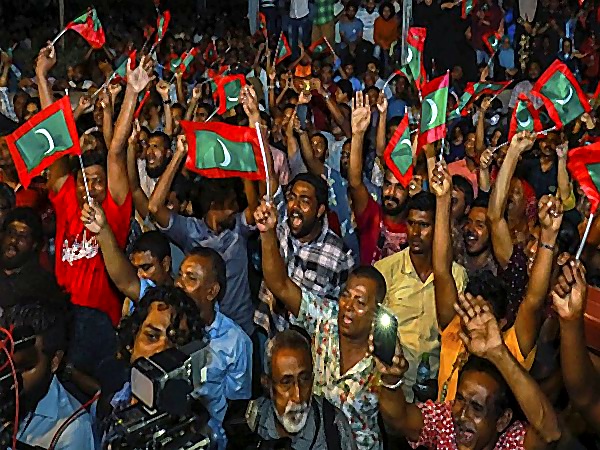
Recognizing the heavy political sway India held over the Solih administration, the Maldivian public launched the "India Out" movement in protest. The government attempted to discredit the movement by framing it as extremist sentiment. In truth, the outrage felt by Maldivians who love their faith and national independence was never about securing power for any single politician.
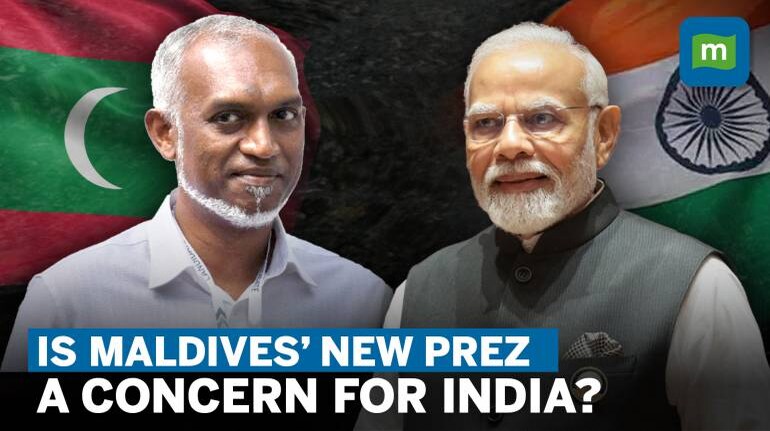
As history recorded, this public outcry and nationalist fervor culminated in the defeat of Ibrahim Mohamed Solih's government in the 2023 presidential election and the election of President Dr. Mohamed Muizzu. The Muizzu administration subsequently announced that, in accordance with the public's wishes, it had completed the withdrawal of Indian military personnel by replacing them with Indian civilian technical experts to maintain the platforms. Yet, this has proven to be a change in appearance only. Indian military personnel remain present in the Maldives, while Indian RAW intelligence operations continue to expand significantly across the country, backed by millions of dollars spent monthly to fund double agents among Maldivians. This stands as a major obstacle to safeguarding the sovereign independence of the Maldives.
I have consistently written and spoken out on these issues not to serve the personal ambitions of any political leader, nor to yield gain for any political party. I do not know former President Yameen personally. Every article I have penned represents my genuine conviction on what best serves the nation, the sacred faith of Islam, and the beloved people of the Maldives.
Matters of paramount national importance must not be degraded into partisan infighting, nor should they be exploited for the personal advancement of individual politicians. On issues concerning national security, sovereignty, and the protection of Islam, Maldivians of all political persuasions must stand united under our national flag of green, red, and white.
I am not a member of any political party, nor am I a follower hiding behind the heels of any politician. By the grace of Allah, I am a Maldivian Muslim—born of this soil, with Maldivian blood in my veins, and a deep love for Islam. My prayer is that Almighty Allah keeps the Maldives forever free and sovereign, and preserves the light of Islam upon this land indefinitely. As my professor wisely noted that day, may the Maldives stand on its own feet—subjugated by no foreign power, unreliant on external aid, and fully developed into an exemplary Islamic state, just as Singapore did. Amen!