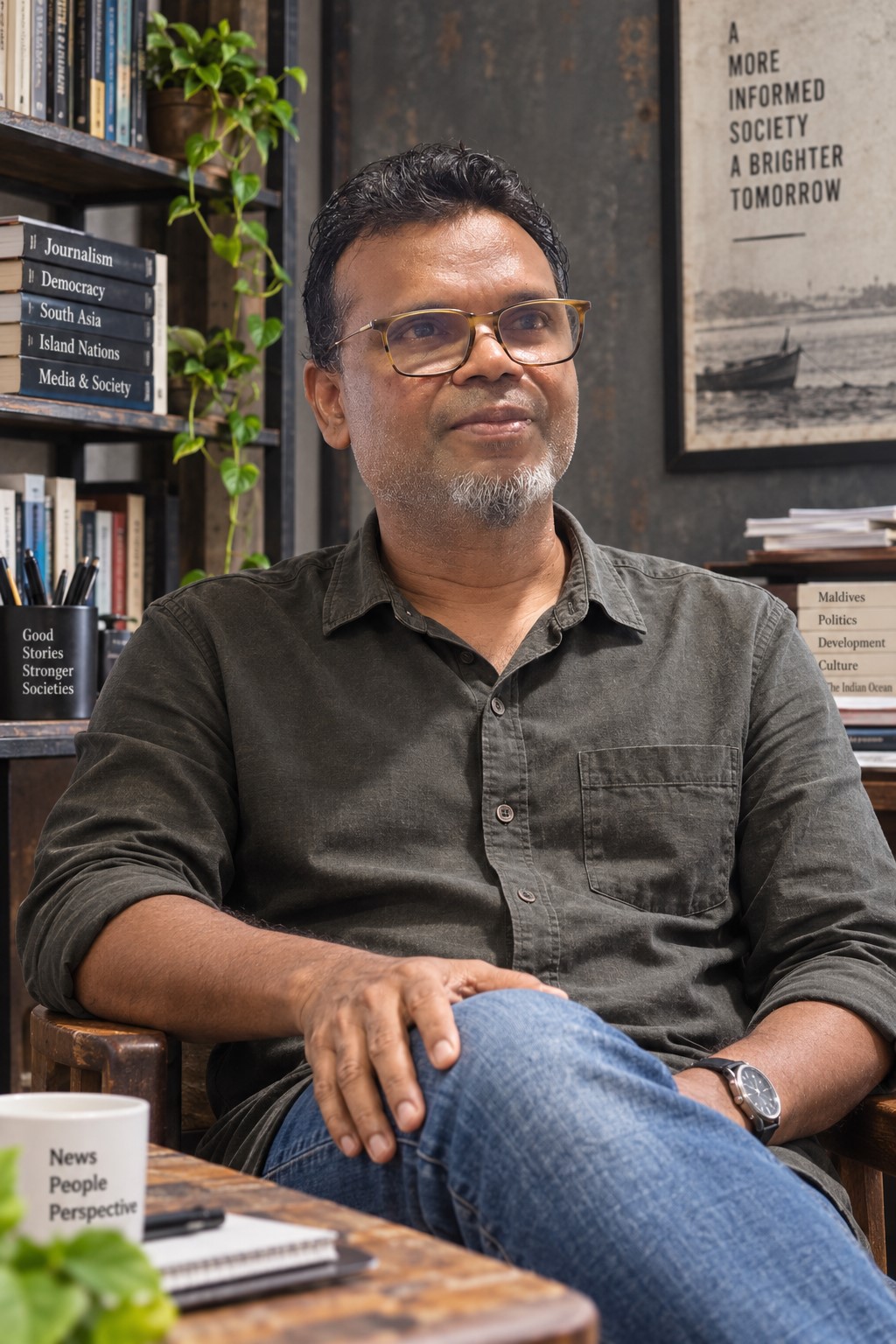
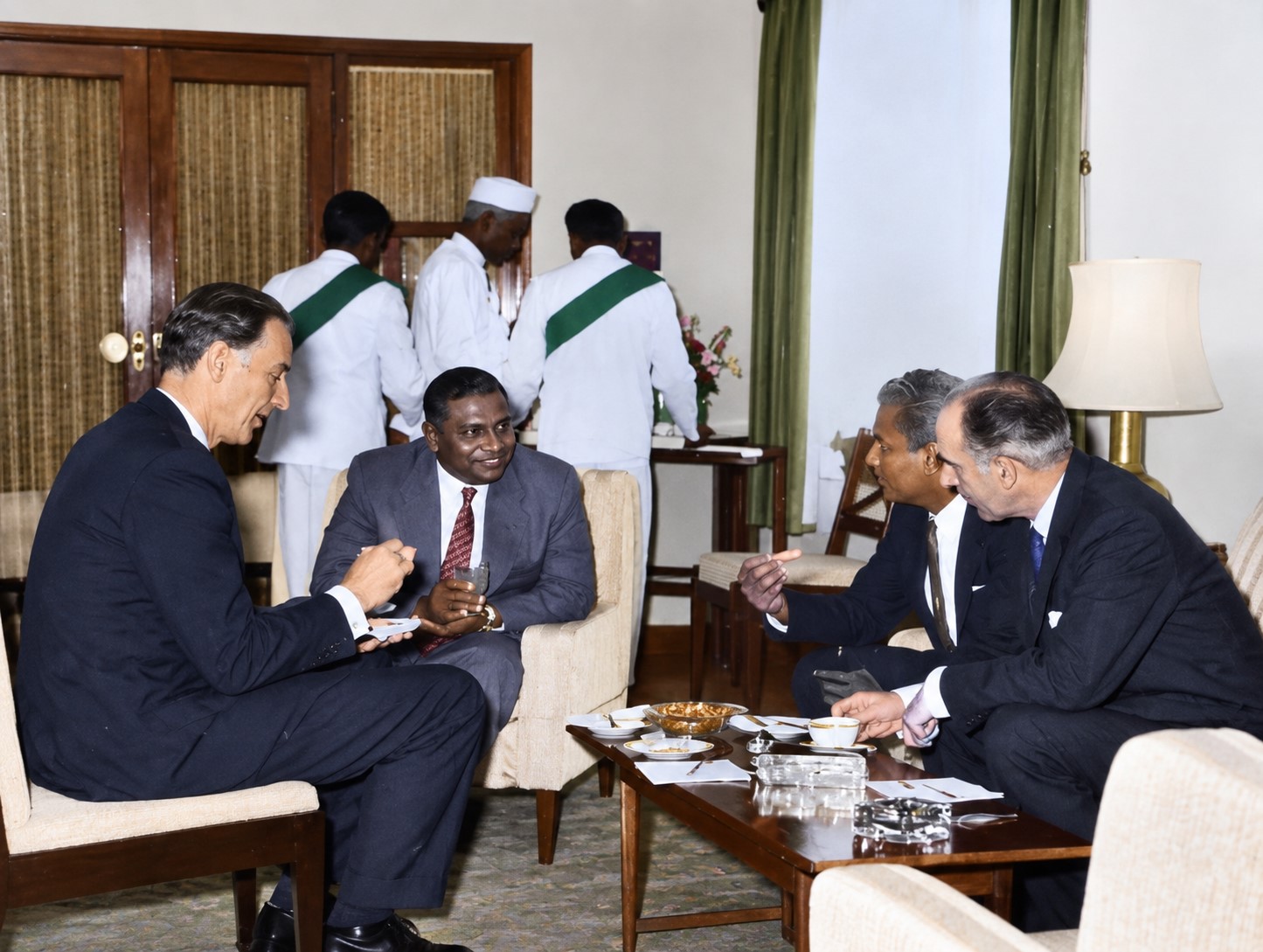
Reflecting on more than two decades in public life across parties like the IDP, DRP, PPM, and JP, Umar Naseer frames his political journey through the lens of a maverick who consistently refused internal compromises. "Because I constantly resisted, I was kicked out of both the DRP and PPM," Naseer stated. "A prime example of this was my opposition to appointing Adheeb as Tourism Minister in 2012, which led to a heated argument between President Yameen and me during a PPM leadership meeting. Three years later, I was proven to be right. I am a maverick. I have always held onto my beliefs and principles, no matter what platform I stood on. I follow my personal convictions."
Rather than seeking to build consensus, Umar defines himself as a conviction-driven leader modeled after historical figures such as former Maldivain leaders such as Ibrahim Nasir, Mohamed Thakurufaanu, and Dhon Bandaarain, alongside global leaders such as Mahatma Gandhi, Abraham Lincoln, Nelson Mandela and Lee Kuan Yew. "There are two types of leaders: those who build consensus before acting, and those who act out of deep conviction. I belong to the latter," he emphasized. "I believe most leaders who truly changed the world or their countries were 'conviction leaders,' and President Ibrahim Nasir was undoubtedly one of them."
Characterizing contemporary party politics as self-serving theatre and kleptocracy, he argues: "Money is influencing political decisions everywhere. Foreign funding compromises our sovereignty, while parts of our society have grown accustomed to handouts during election cycles. Political parties have transformed into machines of wholesale corruption. Democracy has turned into a Kleptocracy."
His strategy to dismantle the current political system revolves around eliminating state funding for political parties, removing centralized membership registries maintained by electoral authorities, and allowing any two citizens to form a political entity. By stripping away artificial entry barriers, he aims to make political office financially unattractive to ensure it only draws those with a genuine heart for service.
Rejecting the "Small Country" Mindset
Naseer forcefully rejects the idea of Maldives being a small country with few resources, asserting that geographic size should never serve as an excuse for national stagnation. "The 'Small Country' mindset is just an excuse to cover up failures," he stated. "We have more than enough resources to transform this nation into a First World country. We are strategically located on a global trade route, possess the most beautiful islands in the world, and are surrounded by a rich ocean. To get there, we need a visionary leader, a skilled and educated population, and a stable political environment. Unlike many other nations, we share a single race, practice one religion, and speak the same language."
His core philosophy on state governance centers on minimal state intervention: "When the government withdraws from the personal lives of its citizens, individuals, families, and society naturally step up to reclaim those vital roles."
Fiscal Austerity and Public Sector Overhaul
At the center of his domestic administrative strategy is an aggressive plan to shrink state expenditure by 30%. "I have always advocated for a small government," Naseer noted. "We need a major overhaul of our governance system; the present structure is too top-heavy, and no tax system can support it without printing money. I will reduce government spending by 30%. To achieve this, I will abolish some institutions, merge others, reduce unnecessary mandates, and downsize staff. Some public companies will be dissolved, others privatized, and the rest reformed."
Umar Naseer also said that: “Social subsidies would be strictly targeted to those genuinely in need, with free state medical services no longer applying to individuals earning over MVR 75,000 a month. Calling his proposed changes "the largest government overhaul of the century." He also added: "While some of these measures may be unpopular, I will not be thinking about the next election—I will be thinking about the next generation."
His platform targets ex-politician perks, proposing to completely strip all post-term perks from former Members of the Peoples Majlis. "While we must provide ex-Presidents with a basic pension and security detail, they will no longer receive medical insurance or diplomatic privileges," he declared. "In fact, my administration will completely eliminate medical insurance and diplomatic perks for all former Presidents, former MPs, and sitting MPs alike."
Local governance would undergo an equally drastic restructuring. The Malé City Council will be officially dissolved, transferring its mandate directly to the government, with management optimized through five distinct municipalities (Malé, Hulhumalé, Vilimale, Gulhifalhu, and Thilafushi) led by government-appointed CEOs with high corporate standards. Across the outer atolls, elected island councilors will shift to part-time status to reduce fiscal burdens, leaving daily operations to a single full-time degree-educated leader: An atoll Governor. Umar proposes an Atoll Governor who will have broad executive mandates akin to Chief Executive Officers. Nominated by the President and indirectly elected, these Governors, he says, must have at least 10 years of public sector executive experience and no political party membership in the preceding three years.
Legislative, Majlis Reforms
To address corruption within the People’s Majlis, Naseer advocates capping parliament at a fixed 50-member body and matching MP salaries directly to the pay tier of a school headmaster. He will introduce a strict "Ask Not, Give Not" law (Edhun Manaa, Dhinun Manaa Qaanoon), under which members of the public, clubs, organizations, and businesses cannot request favors or money from an MP, while MPs will be legally barred from offering, giving, or seeking financial handouts.
To preserve voting by personal conviction, political party whips will be completely outlawed, and a recall vote mechanism will allow constituents to remove underperforming or corrupt MPs before their term ends. Furthermore, says Umar, combining parliamentary and local council elections will save approximately MVR 50 million while helping communities disengage from political activities for a five-year period.
Anti-Corruption Laws: STO to stop trading common goods, MIFCO will be privatized
To tackle systemic corruption within state-owned enterprises, in an Umar-administration, SOEs will be decoupled from politics: FENAKA will be dissolved and its powerhouses, sewerage systems, and water networks handed over to island councils (supported by STELCO for technical assistance), HDC will transition from a business corporation to the Hulhumalé Development Authority, STO will stop trading common goods, MIFCO will be privatized, MTCC will focus exclusively on infrastructure and transport, and WAMCO will fall under Municipal Services.
Foreign Military Withdrawal and Geopolitical Balancing
On foreign policy and national security, Naseer maintains an absolute stance against foreign military forces within Maldivian borders. Asserting that foreign troops operate as strategic outposts that expose key islands like Gan, Feydhoo, and Hithadhoo to destructive fallout in external conflicts, he pledges an immediate cancellation of military agreements.
"Our bilateral and historical ties with India run deep," Naseer stated. "We must enhance economic and security cooperation, while respecting and accommodating Indian security concerns to help thwart any threats emanating from our waters. However, for this to happen, a physical presence is not required—a red line we must firmly establish."
On global diplomacy, he added: "We must cultivate robust relations with both India and China. They are our powerful neighbors. Given our geographic distance from Washington, a more restrained engagement with the United States will be practiced, especially given their support for the genocide in Gaza."
Chagos Archipelago belongs to the Maldives
On the international stage, Umar Naseer firmly asserts that the Chagos Archipelago is an integral part of Maldivian territory, challenging long-standing historical claims. He insists that reclaiming sovereignty over the islands is essential for protecting the nation's strategic ocean resources and maritime borders. To achieve this, he vows to pursue a peaceful resolution by leveraging every available international legal body, multilateral forum, and diplomatic channel.
Islamic Governance, Values, and Pragmatism
Addressing his platform's core values, Naseer defined his approach to Islamic Shariah and public administration: "Islam is a way of life, a system of governance, and a path to justice. Principles drawn from Islam to be included in governance will be adopted, codified, and implemented in my Presidency. To begin with, honesty in leaders, freedom from corruption, equal opportunity, and justice for all are universal principles."
Regarding international pressures and cultural/religious independence, he explained: "I will not try to appease every country or region. Our values, customs and traditions maybe different from other countries. No country should ask us to follow their customs and traditions. However, domestic pushbacks will be carefully managed. I will not go too far away from public opinion. I will be pragmatic. But I will not try to appease everyone. I will do what is right for the country in the long term. Anything that directly impacts public life will be implemented after careful thought."
Rigorous Law Enforcement, Counter-Narcotics, and Capital Punishment
Naseer presents an uncompromising stance on organized crime, gang networks, and illicit narcotics. Pointing to systemic failures, he noted:
"Gangs have entered politics and business, laundering their illicit money through small businesses. In exchange for funding political campaigns, politicians keep the police away from the gangs. Drugs are their main source of income, which has increased by 500% over the last five years. Gang rivalries are now managed by parliamentarians and government ministers who liaise with courts and lawyers. The new Gang Law that came into effect almost a year ago, on August 25, 2025, is toothless. No gang members are behind bars, while drug abuse, scamming, and kidnapping are on the rise," he said.
Drug boats will be sunk on the high seas.
Umar says that under his leadership, MoniCon electronic tagging will return for gang members, with 18-month prison sentences for violations and up to 15 years for gang leaders. On Day 1, his first Executive Order will immediately freeze the passports of gang leaders and major drug dealers to prevent them from fleeing the country. Traffickers caught with large quantities will face the death penalty, and drug boats, he says, will be sunk on the high seas.
Death penalty and toothlessness of Western laws
On enforcing capital punishment for murderers and major drug traffickers, he stated: "I have advocated for these things consistently for 2 decades and when I get elected, I will have a clear mandate from the people. I do not need further approval from any other body. Western countries who usually lecture small countries like us on these matters has lost its moral standing after Gaza genocide." He plans to incorporate selective Shariah principles to handle corruption, murder, and trafficking, adding: "I believe that the current trajectory of Maldives cannot be reversed by western style laws."
Rehabilitation will be restructured entirely: centers will be outsourced to NGOs with state assistance, operating on a dedicated rehab island. Rehabilitation will begin within 24 hours of drug users being caught, completely bypassing the court process and abolishing the Drug Court, with homeless addicts taken into immediate state care.
Police officers above a certain rank to carry pistols
To fortify security operations, Umar’s presidency will let police officers above a certain rank to carry pistols as standard equipment for life-saving protection against armed gangs. He will change the administration so that the Police and MNDF will operate as integrated partners, with MNDF granted police powers of arrest and entry, linked via a unified Command and Control Centre.
Economic Diversification and Infrastructure Megaprojects
Addressing regional economic growth, Naseer emphasized that housing issues stem from deeper structural causes: "Without economic diversification, decentralized regions are unlikely to succeed. The primary pull factor is the economy; jobs and business opportunities are the main forces driving regional prosperity. My policy is 'First Things First.' We need to build strong, diversified economies in as many regions as possible. We must establish a robust governance system that does not scare away investors with political rivalry. The housing crisis is merely a symptom of a much larger problem."
His framework anchors the national economy on three key pillars: tourism (private sector driven), fisheries (fully privatized), and maritime (state-led infrastructure). Two transshipment ports in the far North (Ihavandhippolhu) and South will be top priorities, with Phase 1 completion targeted within his first term through tax and loan financing.
For Addu City, he envisions a Free Trade Port Zone (FTPZ) near the airport, featuring a deep-sea port, 30 modern warehouses, and transit roads to form a regional duty-free logistical hub. "Ultimately, Adduans must stop asking governments for minor concessions and instead start pushing for true economic empowerment," he stated.
Halal Toursim
In tourism, he opposes an immediate total ban on alcohol as unpragmatic prior to economic diversification, choosing instead to encourage Halal tourism through tax incentives to avoid aiding regional competitors. To empower local entrepreneurs, he pledges to lower entry barriers and offer targeted tax breaks to Maldivians building resorts, while ending systemic corruption: "Today political parties take bribe from foreign investors. Every resort owner, local or foreign has to pay over USD2million to government officials under the table- taken in the name of party donations. I will bring an end to this."
Demographics: incentivizing families to have more children
To tackle declining birthrates and support long-term economic growth toward developed status by 2050, Naseer will establish a National Planning Agency to incentivize families to have more children, building the workforce required to sustain long-term economic expansion.
Too many migrant workers have become illegal entrepreneurs
On the expatriate worker crisis, his focus targets shadow businesses: "While I recognize the need for affordable labor to drive the economy, the primary concern is that too many migrant workers have become entrepreneurs, taking over numerous cafes, salons, and workshops. I will shut down these informal businesses and deport the individuals involved." Middle and upper management and skilled jobs will be reserved for Maldivians using tax incentives for compliant companies, alongside an MVR 100 million annual allocation for skills development. Quota brokers and trafficking offenders will face immediate license freezes and heavy fines.
Free degree and skills training to build a generation of disciplined entrepreneurs
For youth, he aims to expand free degree and skills training programs to build a generation of disciplined entrepreneurs. "I want a highly educated, highly skilled, hardworking, and disciplined generation to take this country in a completely new direction. The Gen- Z of Maldives must reject the old politics of corruption and favoritism."
Judicial Independence and Oversight
Judicial reform includes establishing a Ministry of Justice to oversee administrative management and clear court backlogs within two years. However, the Judicial Service Commission (JSC) will be restructured to consist strictly of sitting judges and Supreme Court justices, completely removing executive, legislative, and presidential representatives.
Anti-Corruption Commission (ACC) will be merged into the Auditor General’s Office
To eliminate redundant bureaucracy and tighten state oversight, the Anti-Corruption Commission will be formally integrated into the Auditor General’s Office. Press freedom will remain protected under this framework, provided media operations align with core Islamic ethical principles and national values. Additionally, journalists will be legally required to take an official oath committing to objective, truthful reporting to ensure public accountability.
The Independent Campaign Approach
Refusing political coalitions or governance power-sharing deals, Umar plans to run as an independent candidate driven by meritocracy. "Traditional politics is dying. Twenty years of broken promises, systemic corruption, and the embezzlement of state funds have disqualified established political parties," he remarked, citing international shifts toward non-mainstream leadership. "Candidates like me... I am an outsider and a maverick. Therefore, if elected as an independent candidate, I will have the unique advantage of running a true meritocracy, completely free from the influence of a greedy political entity."
Financing his campaign through grassroots micro-donations, while rejecting contributions from major business tycoons, he calls on voters to break the political cycle: "I will ask them to believe in Allah, and to believe that the Maldives has a chance to succeed and break free from this vicious cycle. I will ask them to take that risk. I will ask them to look at Sri Lanka as an example—a country that is doing very well after rejecting the political establishment."
Conclusion:
In sum, Umar Naseer’s manifesto presents a sweeping, uncompromising agenda that seeks to dismantle the Maldives' political establishment through radical governance reforms, strict fiscal austerity, and an unwavering commitment to national sovereignty. By championing small government, the complete eradication of political party perks, stringent anti-corruption laws, and zero tolerance for organized crime and foreign military presences, he offers a high-stakes alternative to conventional party politics. Grounded in economic self-reliance, regional empowerment, and selective Shariah principles, his vision avoids short-term electoral politics in favor of a fundamental, generation-focused reset of the nation's legal, security, and economic framework.